
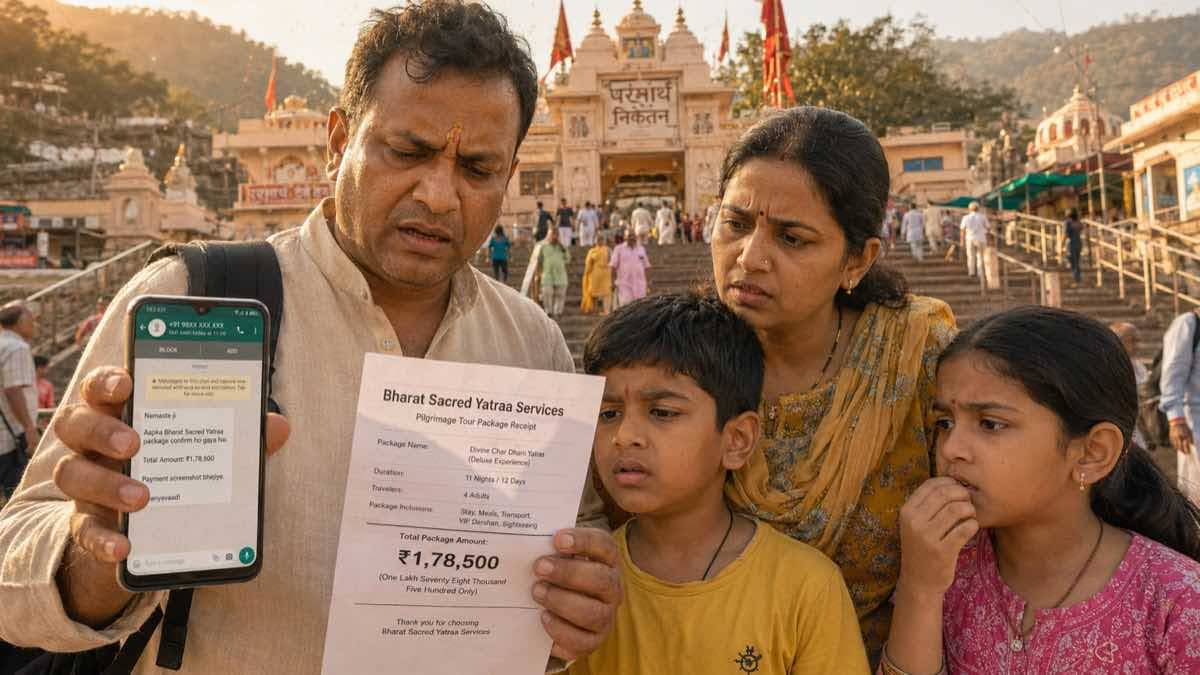
Travel scam India 2026 schemes can look like the start of a perfect holiday: a sponsored pilgrimage package, a hotel listing with polished photos, a WhatsApp agent offering the last room, or a driver waiting outside an airport. The loss becomes clear only when the ticket fails, the property has no reservation, or the contact disappears.
The threat is not hypothetical. India's I4C warned that fake websites, search ads, social pages and WhatsApp accounts were impersonating religious and tourist services, including Kedarnath helicopter tickets, Char Dham packages, hotels and taxis. In 2026, police operations in Uttarakhand and Odisha found hundreds of fraudulent pages, sites and contact numbers targeting pilgrims.
This guide explains the seven formats travellers are most likely to meet, the evidence behind the warning, and a verification routine to use before any deposit or full payment.
Money sent to a fake booking?
Call 1930 now, contact your bank or payment provider through its official fraud channel, and file at cybercrime.gov.in. Save the advertisement, URL, chat, phone number, beneficiary name, UPI ID, invoice and transaction reference.
Why Travel Season Is Peak Scam Season in India
Yatra dates, school holidays, festivals and long weekends compress demand into short periods. Travellers searching for scarce rooms or transport are more willing to trust a claim such as "only one slot left". A fraudster can copy a temple logo, hotel photographs, reviews and a government-style colour scheme in hours, then buy an advertisement that appears above the genuine result.
The I4C national advisory of 19 April 2025 described exactly this pattern and told travellers to cross-check through official portals or trusted agencies. A December 2025 Lok Sabha answer also addressed cyber fraud targeting pilgrims and tourists through hotel bookings, travel packages and donations.
Urgency is the real product being sold. Once a traveller believes a room, darshan slot or helicopter seat will vanish, normal checks feel like a delay. Genuine scarcity does not make an unverified payment safe.
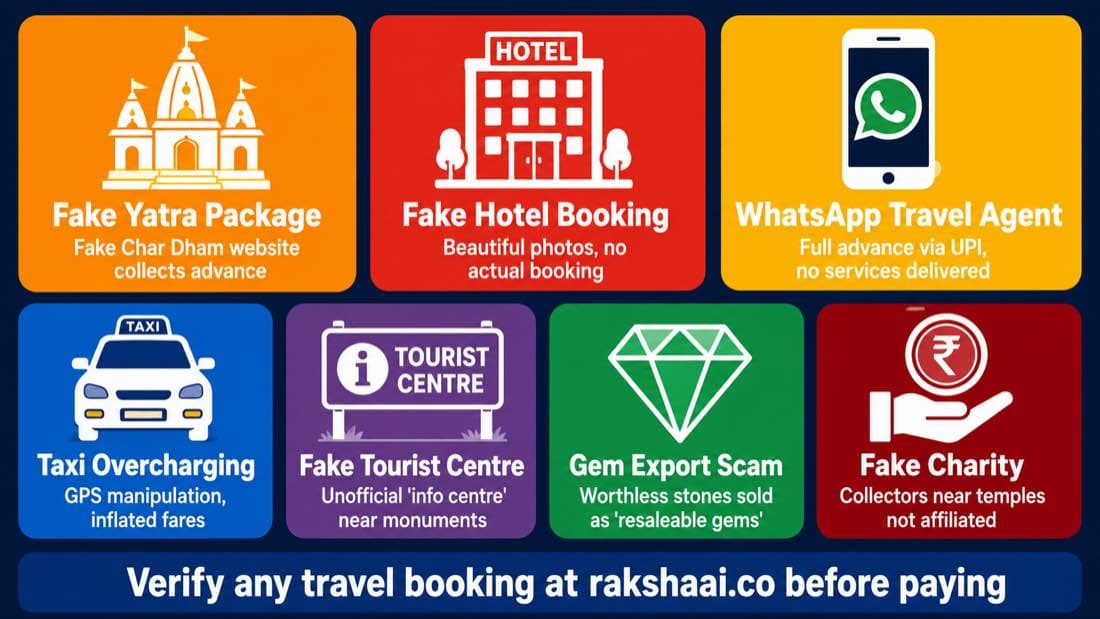
The 7 Most Active Travel Scams in India Right Now
Scam 1: Fake Char Dham and Pilgrimage Package Websites
A Char Dham yatra scam India campaign copies the name and imagery of a shrine, operator or booking service, then sells registration, helicopter tickets, rooms or an all-inclusive tour. The site may use a sponsored search placement and move the buyer to WhatsApp. Payment goes to a personal UPI ID or unrelated bank account, followed by a forged confirmation.
Rudraprayag Police's 2026 digital sanitation drive identified and disabled 347 fake Facebook pages, 19 Instagram accounts, 30 fraudulent websites and 189 WhatsApp or mobile numbers linked to illegal booking schemes, according to The New Indian Express. Official Char Dham registration is free through Uttarakhand Tourist Care. Kedarnath helicopter booking is through IRCTC Heli.
Scam 2: Fake Hotel and Resort Booking Portals
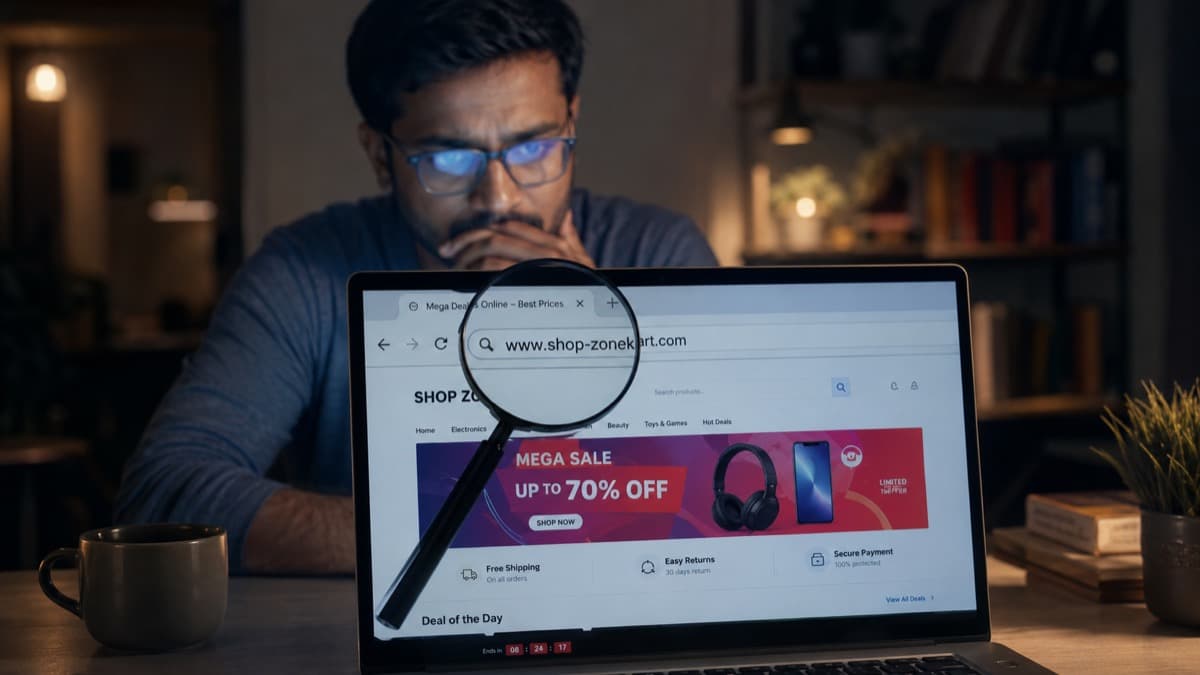
In a fake hotel booking India scheme, criminals clone a property site, create a non-existent listing, or attach their own phone number and link to a search or map listing. A supposed receptionist confirms availability and demands an advance. The real hotel has no record when the family arrives.
Ahead of Puri's 2026 Rath Yatra, Odisha Crime Branch blocked at least 46 fake hotel websites in nine days, according to Outlook India. In Goa, police said a gang used non-existent villas and fake listings to deceive at least 500 tourists, as reported by The Indian Express in January 2025. Call the property using a number from its independently verified official site, not the number in the advertisement or message.
Scam 3: Fake Travel Agent WhatsApp Packages
A fake travel agent India account offers a package far below normal cost and supplies a brochure, GST number or Ministry letter copied from a real company. Full advance is requested before a written contract or confirmed supplier bookings. In May 2026, Noida Police arrested three company directors accused of collecting money for packages that were not delivered and using fake tourism ministry documents, according to Hindustan Times.
WhatsApp does not make an agent fake, but a chat profile proves nothing about identity or authority. Verify the legal entity, official email domain, office, beneficiary and each major supplier independently.
Scam 4: Taxi and Auto Overcharging and Route Manipulation
A taxi overcharging scam India incident may involve a broken meter claim, a much longer route, a fake prepaid counter, invented tolls, a changed app trip, or intimidation after the passenger is inside. In January 2026, Mumbai Police arrested a driver after a US visitor alleged she was charged ₹18,000 for a roughly 400 metre airport trip. The Indian Express later reported decoy operations and cases involving alleged threats and inflated fares.
Use the official airport counter or a ride booked inside the operator's own app. Confirm the number plate, driver and fare before moving, keep navigation open, and do not follow a stranger to an unofficial kiosk.
Scam 5: Fake Tourist Information Centre Near Monuments
A tout says the attraction, road, train or official office is closed, then redirects the visitor to an "information centre" that sells an overpriced replacement itinerary. Official-looking signs and phrases such as government approved may be marketing, not proof of government ownership.
Check closure claims on the monument, railway, state tourism or district administration website. A genuine information desk should not pressure you to cancel a confirmed booking or immediately buy a private package.
Scam 6: Gem and Handicraft Export Scam
A friendly local claims tourists can buy gems or handicrafts cheaply and resell them abroad for a guaranteed profit. The buyer receives glass, low-grade stones or grossly overpriced goods. Sometimes a supposed overseas buyer calls to make the scheme feel complete.
Treat guaranteed resale profit as the fraud signal. Do not transport or ship goods for a stranger, do not let a seller control the valuation, and do not make a high-value purchase without an independent expert and written return terms.
Scam 7: Charity Scam Near Temples and Tourist Spots
A pilgrimage scam India collector uses a shrine name, badge, receipt book or emotional story to request cash or UPI payment. The person may not be affiliated with the trust at all. QR stickers can also be placed over a genuine donation code.
Donate at the official counter or through a URL you typed from the trust's verified site. Check the payee name before approving UPI and never let anyone rush or handle your phone.
How to Verify a Travel Package or Hotel Booking Before Paying
How to verify a travel package or hotel booking in India before paying:
- Book through the property's independently verified official website or an established platform, then retain the confirmation inside your account.
- Search the agency or property name with reviews, complaint, fraud and scam before paying. Treat anonymous posts as leads to verify, not proof by themselves.
- Search the agent or operator in the Ministry of Tourism NIDHI+ classified provider database. Recognition is voluntary, so absence is not automatic proof of fraud and presence is not a guarantee.
- Do not pay the full amount upfront to an unknown agent reached only through WhatsApp. Demand written terms, cancellation rules, supplier names and an invoice.
- Call the hotel through contact details you found independently and ask reception to confirm the guest name, dates, room type and amount. A video call alone is not conclusive.
- For Char Dham, register only through registrationandtouristcare.uk.gov.in. Use IRCTC Heli for official Kedarnath helicopter tickets.
- Run an unfamiliar booking URL through the RakshaAI website safety checker and follow the deeper fake website check before entering payment details.
- Compare the total with the hotel, airline or operator's direct price. A dramatic discount combined with urgency, personal payment and no verifiable inventory is a strong fraud pattern.
No single check proves that a booking is safe. Match the agent, company, domain, beneficiary, invoice and supplier confirmation as one chain. A real GST number or video call can still be copied or staged.

Portal accuracy note: Char Dham registration uses registrationandtouristcare.uk.gov.in. Kedarnath helicopter tickets use heliyatra.irctc.co.in.
Safe Travel Payment Rules in India
- Pay the verified business: the beneficiary name should match the hotel, operator or contracted legal entity. Question a personal UPI ID.
- Use the official checkout: type the known domain or open the provider's own app. Do not pay through a link sent by an unknown contact.
- Keep written evidence: save the itinerary, cancellation terms, invoice, payment reference and direct booking confirmation.
- Split risk: where legitimate terms permit, use a reasonable deposit and pay the balance after defined confirmation instead of sending everything to a new agent.
- Read the UPI screen: a UPI PIN approves a debit. Review RakshaAI's UPI payment safety guide before paying an unfamiliar beneficiary.
- Pause when pressured: a deal that disappears unless you pay during the call is designed to prevent independent verification.

Real Travel Scam Cases and What the Evidence Shows
- National pattern: I4C officially warned about fake pilgrimage, hotel, taxi and holiday booking services promoted through websites, ads, social media and WhatsApp.
- Kedarnath and Char Dham, 2026: Rudraprayag Police's reported takedown covered hundreds of fake social accounts, sites and contact numbers. The scale shows why a familiar logo or active page is weak evidence.
- Puri, 2026: authorities blocked fake hotel booking sites ahead of Rath Yatra. Seasonal demand and scarce rooms were central to the lure.
- Goa, 2025: police alleged that non-existent villas advertised through online portals affected at least 500 tourists. Being visible on a known platform did not remove the need to verify the property.
- Mumbai, 2026: an airport visitor's alleged ₹18,000 charge for a 400 metre trip led to an arrest and a wider enforcement operation.
Counts above are attributed to the named authority or publication and may describe identified pages, police allegations or complaints rather than final convictions. They should not be added together as a national victim total.
What to Do After a Fake Booking or Travel Payment
- Call 1930 immediately for financial cyber fraud and note the acknowledgement number.
- Report through your bank, card issuer, wallet or UPI provider's official fraud channel. Ask whether a hold, recall, chargeback or dispute route applies.
- Complete the complaint at cybercrime.gov.in.
- Preserve screenshots, the full URL, advertisement, call logs, chats, email headers, invoice, payee details, UTR or transaction reference and the real hotel's denial.
- Where a travel business or platform service is involved, use the National Consumer Helpline for pre-litigation support. Police and consumer routes serve different purposes.
- Follow RakshaAI's already paid a fake agent action guide and warn companions without publishing sensitive personal or banking data.
30 Second Instagram Reel Script
0 to 3 seconds, hook: "Planning a yatra or holiday? One fake booking can ruin the whole trip."
3 to 10 seconds, visual: Show a WhatsApp package, hotel page and payment request. Voice: "Scammers copy Char Dham portals, hotel listings and travel agents, then demand a full advance."
10 to 19 seconds, proof: Show the seven-scam graphic. Voice: "Police found hundreds of fake pages and numbers targeting pilgrims in 2026. Taxi overcharging and fake tourist centres are active too."
19 to 27 seconds, safety: Show the official portal card. Voice: "Confirm with the hotel directly, check the payee name, and use only the Uttarakhand portal and IRCTC Heli for Char Dham services."
27 to 30 seconds, CTA: "Check the website at RakshaAI before paying. If money is gone, call 1930 now. Save and share this."
On-screen caption: Verify the booking. Verify the beneficiary. Never pay under pressure.
Frequently Asked Questions
How do I book a safe Char Dham yatra package in India?
Register through the Uttarakhand government portal at registrationandtouristcare.uk.gov.in or its Tourist Care Uttarakhand app. Registration itself is free. For Kedarnath helicopter tickets, use the official IRCTC Heli portal at heliyatra.irctc.co.in. If buying a wider package, independently verify the operator, written inclusions, hotel confirmations, cancellation terms, and business payment account before paying.
What is the gem export scam for tourists in India?
A friendly stranger or shop claims that locally bought gemstones can be resold abroad for a large profit or shipped under a special scheme. The tourist pays for glass, low-quality stones, or grossly overpriced goods, while the promised buyer or export business does not exist. Never buy gems for resale based on a stranger's claim, and use an independent qualified valuer for any genuine purchase.
Is it safe to book hotels on WhatsApp from travel agents in India?
WhatsApp is only a communication channel, not proof that a hotel or agent is genuine. Do not send a full advance to a personal UPI account. Find the hotel's official contact details independently, confirm the reservation directly, check the beneficiary name, demand a proper invoice, and use a payment method with a documented dispute process where available.
How do I find a legitimate travel agent in India?
Search the Ministry of Tourism NIDHI+ classified provider database and Incredible India travel partners, while remembering that government recognition is voluntary and a listing is not a guarantee. Verify the legal entity, GST details where applicable, office address, official domain, bank beneficiary, written terms, complaint history, and the hotel or transport booking independently.
What should I do if I paid for a fake tour package in India?
Call 1930 immediately, alert your bank or payment provider through its official fraud channel, and file at cybercrime.gov.in. Preserve the advertisement, URL, chats, phone numbers, invoice, beneficiary details and transaction reference. You can also seek pre-litigation support from the National Consumer Helpline where a travel business or service deficiency is involved.
Sources and Credits
- I4C and Ministry of Home Affairs warning on tourist and pilgrimage booking fraud, 19 April 2025
- Ministry of Tourism measures on overcharging, misleading packages and provider approval, 9 February 2026
- The New Indian Express report on the Rudraprayag Police booking scam crackdown, 28 May 2026
- Outlook India report on fake Puri hotel booking sites, 29 June 2026
- The Indian Express report on non-existent Goa villa listings, 20 January 2025
- The Indian Express report on Mumbai airport fare extortion cases, 25 February 2026
- Uttarakhand Tourist Care official Char Dham registration portal
- Ministry of Tourism NIDHI+ classified travel-agent database
Check before the trip becomes a loss
Paste an unfamiliar hotel, yatra or travel-package URL into RakshaAI before entering payment details.
Open the website safety checkerMore from RakshaAI Blog
Stay Protected Online
Use RakshaAI to check websites, phone numbers, and UPI IDs for scams free, instant, no sign-up required.
RakshaAI is a private platform by Ehatech Services Pvt. Ltd. Not affiliated with any government body. Editorial policy