
Investment Scams in India 2026: 7 Types, Ponzi Schemes & How to Report
Investment fraud is the single largest category of financial cybercrime in India. A ponzi scheme, fake trading app, pyramid scheme, or pig butchering scam all share one feature: they show you profits you can never access, then disappear with your savings.
In 2025, NCRB recorded 1.8 lakh investment fraud complaints equivalent to 493 new victims every single day. Total financial cybercrime losses reached ₹22,845 crore with investment fraud dominating. SEBI issued 850 enforcement orders and warnings in 2025–26. Less than 5% of victims recover the full amount.
This page covers all 7 confirmed investment fraud types active in India in 2026 how each operates, how to spot them before you invest, how to protect yourself, and how to report if you've been targeted.
Suspicious Investment Platform?
Verify any trading platform or investment website against SEBI's investor alert list before you deposit a single rupee.
Check Website Safety FreeInvestment Fraud Scale in India 2025 / 2026 Data
Investment fraud is now India's single largest financial cybercrime category. NCRB 2025 data shows 1.8 lakh complaints up 68% year-on-year with total losses reaching ₹22,845 crore. Fake trading apps account for 34% of all complaints. Less than 5% of victims recover the full amount lost.
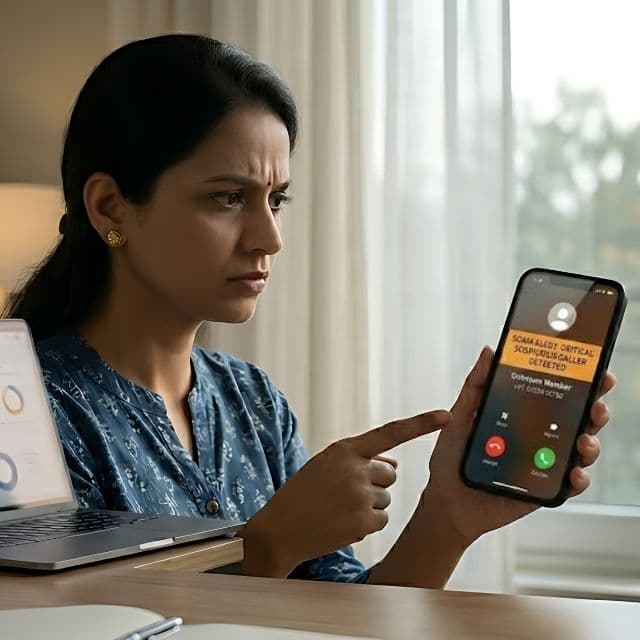
7 Types of Investment Scams in India 2026 Complete Guide
Each operates through a different mechanism but every one promises returns that are mathematically impossible and ultimately steals your savings.
Ponzi Scheme India Fake Return Fraud
Operator promises fixed high returns (3–5% per month) and pays early investors using money from new investors. No real investment happens. Saradha (₹2,500 Cr) and Rose Valley (₹17,000 Cr) are India's largest documented ponzi frauds.
Fake Trading App India Fake Broker Platform
App mimics a real SEBI-registered broker with fake registration documents, fabricated P&L dashboards, and manufactured trade confirmations. Shows profits you cannot withdraw. When you try to exit, 'tax deposits' are demanded before funds that never come.
Pyramid Scheme India MLM and Chain Schemes
Recruits earn by enrolling new members rather than selling real products or generating real returns. Chit fund frauds, MLM scams, and network marketing pyramid schemes targeting tier-2 and tier-3 cities. Only the top 1–2% profit.
Binary Options Scam India Illegal Trading Platforms
Binary options trading was banned by SEBI in 2017. Platforms offering 'binary trading' in India are operating illegally. They use fake broker interfaces, manipulate trade outcomes, and disappear with deposits. Active via Telegram and WhatsApp groups.
Forex Scam India Currency Trading Fraud
SEBI does not regulate retail forex trading in India. Platforms claiming to offer 'legal forex trading' are either operating outside RBI guidelines or are outright fraudulent. Victims are shown realistic-looking currency trading dashboards with fabricated profits.
Pump and Dump Scheme India Stock Market Fraud
Operators buy large positions in illiquid penny stocks, then artificially inflate the price through coordinated Telegram/WhatsApp 'hot tip' messages. Once retail investors drive the price up, operators dump their shares, crashing the price.
Pig Butchering Scam India Crypto Romance Investment Fraud
The most sophisticated and highest-loss investment fraud type. Scammer builds a romantic or friendly relationship over weeks, then introduces a 'highly profitable' crypto or forex trading platform. Victim invests increasing amounts. Platform is fake. Average loss: ₹18.5 lakh.
How Investment Scams Work in India The Fraud Playbook
Every investment fraud in India whether a ponzi scheme, fake trading app, pyramid scheme, or pig butchering scam follows the same underlying architecture. Understanding this framework lets you recognise any variant before you lose a rupee.
What Is the Difference Between a Ponzi Scheme and a Pyramid Scheme?
📉 Ponzi Scheme
Operator collects investor deposits and promises fixed returns from 'investment activities' but no real investment occurs. Early investors are paid from new investors' deposits. No recruiting required. The operator controls all the money. India examples: Saradha Chit Fund (₹2,500 Cr), Rose Valley (₹17,000 Cr), NSEL (₹5,600 Cr).
🔺 Pyramid Scheme
Participants earn primarily by recruiting new members, not from selling real products or generating real returns. Each recruit must recruit more. The top 1–2% profit; 98% lose money. India examples: MLM chains, WhatsApp money chains, network marketing scams in tier-2 cities.
Key similarity: Both are mathematically guaranteed to collapse. Both are illegal in India ponzi schemes under SEBI Act 1992 and IPC Section 420; pyramid schemes under the Prize Chits and Money Circulation Schemes (Banning) Act, 1978.
What Is Securities Fraud? (SEBI Definition for India)
Under the SEBI (Prohibition of Fraudulent and Unfair Trade Practices) Regulations, 2003 (PFUTP Regulations), securities fraud in India covers: fake trading platforms mimicking SEBI-registered brokers, pump-and-dump penny stock manipulation, fake Collective Investment Schemes (CIS), and impersonation of SEBI-registered entities.
SEBI penalties include fines up to ₹25 crore or three times the profits from the fraud, plus criminal imprisonment under IPC Section 420. The Enforcement Directorate handles cases involving money laundering proceeds under PMLA.
Stage 1 The Promise: Guaranteed Returns and FOMO Manufacturing
Investment fraud always begins with a guaranteed return promise typically 2–5% per month (24–60% annually) delivered through Telegram/WhatsApp groups, fake referral networks, or LinkedIn romance contacts. The promise is backed by fabricated SEBI registration certificates, doctored RBI licence documents, and manufactured testimonials from 'existing investors.'
FOMO is manufactured deliberately: limited-time IPO windows, exclusive VIP group invitations, and 'only 3 spots remaining' urgency messaging. This compressed decision-making window prevents the victim from verifying the platform on sebi.gov.in before depositing.
Stage 2 Trust Building: Small Wins, Fake Profits, and Platform Addiction
Early withdrawals are processed without obstruction this is intentional. Allowing the victim to withdraw a small profit (₹2,000–₹10,000) converts scepticism into conviction. The victim increases their deposit. The fake trading platform shows an ever-growing portfolio balance built entirely from database entries, not real trades.
The pattern across documented cases: victims deposit 5–7x their initial amount before the withdrawal block occurs. This is because repeated small wins trigger the same dopamine response as gambling and the scammers have studied this. The sunk cost effect keeps victims investing more after each small win.
Stage 3 The Trap: Withdrawal Blocks, Tax Demands, and Disappearance
When the victim attempts to withdraw a large amount, the platform generates a technical obstruction 'KYC verification required,' 'account under compliance review,' 'RBI tax hold on large withdrawals.' The next demand: a 20–30% 'tax deposit' or 'clearance fee' must be paid before the withdrawal can be released.
This second theft can equal or exceed the original deposit. After the victim pays, the excuses multiply additional compliance fees, exchange rate lock-in charges, SEBI verification deposits. Eventually, the platform goes offline, the Telegram/WhatsApp groups are deleted, and the operator's phone numbers stop responding. The fake trading app disappears from any download source.
The 3-Stage Investment Fraud Playbook
This is India's fastest-growing investment fraud format. Understanding the exact script protects you from every variation of it.
The Friendly Introduction
You receive a message from an unknown number often a woman claiming to have sent it by mistake. A friendly conversation follows over days. She mentions her successful investments casually.
The Invitation to a 'VIP Group'
She invites you to a WhatsApp or Telegram group run by an 'investment expert' often impersonating a real SEBI analyst or a famous trader. The group shows extraordinary daily gains.
Small Wins to Build Trust
You're told to invest a small amount on a specific 'tip'. It works. You see real profit (this is engineered). Confidence rises. You invest more. Others in the group post screenshots of their profits.
The Big Push
TRAP CLOSES HEREA 'once in a year' IPO or trade opportunity is announced. You're urged to invest your maximum amount often ₹5–50 lakh within 24 hours. The app shows spectacular profits building up.
Withdrawal Is Blocked
TRAP CLOSES HEREWhen you try to withdraw your profits, a message appears: 'Your account requires a GST deposit of 18% before release' or 'Tax clearance fee of 15% required by law.' This is a second layer of theft.
Complete Disappearance
After extracting maximum funds, the app stops working. The WhatsApp group is deleted. Phone numbers go silent. The 'friendly contact' who started it all is unreachable. The money is gone.
Suspicious Investment Platform? Verify It Before You Deposit.
Check website age, blacklist status, and SEBI alert list in seconds free.
"I Invested My Retirement Savings. I Thought I Was Finally Getting Ahead." A Real Account
Ramesh (name changed), a 58-year-old government employee from Hyderabad, received a WhatsApp message that appeared to come from a wrong number a young woman who apologised warmly and started a friendly conversation. Over two weeks, she mentioned her uncle who was a 'certified stock analyst' and had helped her triple her savings in eight months.
He was invited to a Telegram group with 340 members. Every morning, the 'analyst' posted trade calls. Members shared screenshots of profits ₹40,000 here, ₹1.2 lakh there. Ramesh joined with ₹50,000. Three days later, following the group's advice on the provided app, his portfolio showed ₹78,000. He could see it clearly on screen.
Over the next six weeks, guided by the group, he invested a total of ₹23 lakh including ₹14 lakh from his PF savings that he'd planned for retirement. His on-screen portfolio showed ₹41 lakh.
When he tried to withdraw ₹5 lakh for a family medical emergency, he received a message: "Your account has been flagged for income tax verification. Please deposit 18% tax clearance ₹7.38 lakh to activate withdrawal."
His son, scrolling through the app's Play Store listing, noticed it had been published 11 weeks ago with 12 reviews and a developer located in "Hong Kong". The official app of the broker they claimed to represent had 4.7 stars and 2 lakh reviews. Ramesh's app was a clone.
The Lesson:
The profits you see in a fake trading app are a fiction numbers in a database the scammer controls. No real trade has occurred. The moment you have to pay to access your own money, you already know the truth. Never pay a withdrawal fee.
How a Ponzi Scheme Actually Works And Why It Always Collapses
Charles Ponzi ran his original scheme in 1920. Every Indian Ponzi fraud since from the chit fund scandals of the 1980s to the multi-thousand-crore schemes exposed in 2022 and 2023 follows the identical mathematical structure.
Month one: 100 investors put in ₹1 lakh each = ₹1 crore raised. The scheme promises 5% monthly returns. Month two: ₹5 lakh is paid out in 'profits' to the first wave. The remaining ₹95 lakh is used to recruit more investors. But now month two's 'profit' obligation requires a new wave. The scheme demands geometric growth forever which is mathematically impossible.
The scheme works and looks profitable precisely as long as more money flows in than flows out. The moment growth slows usually when market saturation hits or regulatory attention draws near the founder must choose between a visible collapse and a quiet disappearance. They always choose to disappear.
India's most notable recent Ponzi cases IMA Jewels (₹2,000+ crore), Vihaan Direct Selling, and dozens of smaller crypto-adjacent schemes all shared the same lifecycle: explosive early growth, impressive testimonials, legitimate-seeming office spaces and websites, then sudden total collapse.
8 Investment Scam Warning Signs You Must Never Ignore
Even one of these signs means stop, step back, and verify independently on sebi.gov.in before investing a single rupee.
Any promise of 'guaranteed' fixed returns 2%, 3%, or 5% per month. No SEBI-regulated instrument offers guaranteed returns. Markets carry risk. Any guarantee is fraud.
The company, broker, or trading app is NOT listed on SEBI's registered broker list at sebi.gov.in SEBI publishes a live list of authorised intermediaries. Check before depositing.
They show you a SEBI registration certificate. Verify the registration number independently at sebi.gov.in fake SEBI registration documents are routinely fabricated with real-looking seals.
You are recruited into the scheme through a Telegram group, WhatsApp message, or social media post offering 'exclusive access' to a trading signal group or investment club.
You can see your profits growing on a platform but cannot withdraw without paying additional fees, taxes, or deposits. Legitimate brokers never charge fees before releasing your own money.
The scheme requires you to recruit others or invest larger amounts to 'unlock' higher return tiers. This is the signature structure of a pyramid scheme operation.
The operator, broker, or platform cannot be contacted by phone on a landline registered to their stated company address. All contact is via WhatsApp, Telegram, or email only.
Returns offered are dramatically above market rates for the asset class claimed 10% per month on 'forex trading,' '300% annual return on crypto,' '15% monthly guaranteed' on mutual funds.
Legitimate SEBI-Registered Broker vs. Fake Trading App
Legitimate SEBI-Registered Broker
- Listed on sebi.gov.in Intermediaries verifiable in 60 seconds
- Available on official Google Play Store and Apple App Store
- Withdrawals processed within 1–3 business days, no fee
- Returns vary never guaranteed, never 2–5% daily
Fake Trading App
- Not on SEBI list APK shared via WhatsApp or Telegram
- Withdrawals blocked until you pay a "tax" or "unlock fee"
- Promises guaranteed daily returns of 2–5%
- Recruited by a stranger through a "wrong number" message
The 60-Second Rule
Before investing a single rupee, search the platform on sebi.gov.in → Intermediaries. If they don't appear, they are operating illegally do not invest.
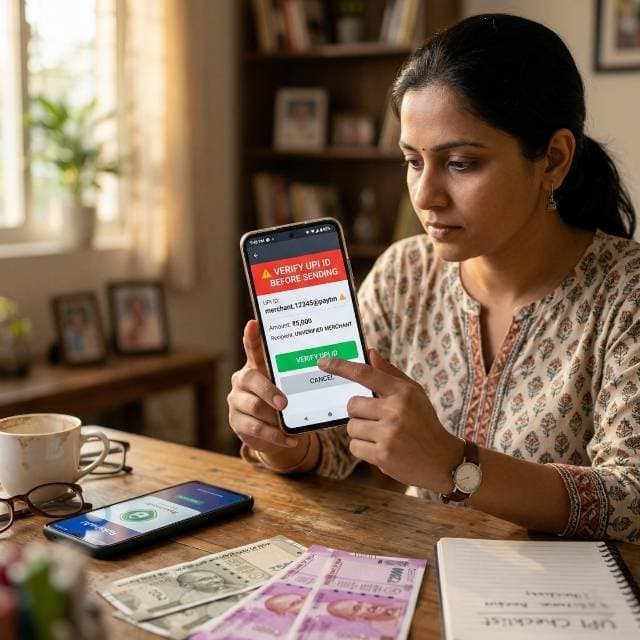
Why Smart, Educated People Keep Falling for Investment Scams
The overwhelming majority of investment fraud victims in India are not financially illiterate. They are often salaried professionals, retired government officers, small business owners people who have managed money carefully their whole lives. Understanding why this is the case is deeply counterintuitive.
First comes social proof. Investment scams rarely approach you cold with an offer they first show you other people succeeding. Screenshots, testimonials, group members sharing profits. Your brain reads this as evidence.
Then comes the sunk cost trap. Once you've invested ₹50,000 and your portfolio shows ₹75,000, you feel heavily invested emotionally and financially. Each escalation feels less like a new risk and more like protecting existing gains.
Perhaps most insidiously, many investment scams use a technique called 'romance baiting' building a genuine emotional connection over weeks before introducing the investment. This creates a loyalty that overrides financial judgement. Victims often describe knowing something felt wrong but not wanting to disappoint a person they'd come to trust.
The SEBI Check 60 Seconds That Can Save Lakhs:
Before investing with any platform or advisor, search their name on sebi.gov.in → Intermediaries. If they don't appear, they are operating illegally. Close the app, block the contact, report to 1930.
The Maths Check 5 Seconds That Can Save Lakhs:
Promised daily return × 365 = annual return. If the answer exceeds 50%, you're looking at fraud. 3% daily = 1,095% annually. No market on earth delivers this. Warren Buffett's lifetime average is 20% per year.
Investment Fraud Myths vs. Reality
Myth
The profits showing in my account are real I can see them clearly.
Reality
The balance displayed in a fake trading app is a number the scammer types into a database. No real trades occur. The real test is whether you can withdraw. If any obstruction appears at withdrawal, the profits were never real.
Myth
I was added to a group by a mistake or coincidence the investment tips were genuine.
Reality
The 'wrong number' introduction is one of the most documented investment scam entry tactics in India. There are no coincidences here. The group, the analyst, the other 'members' posting profits all are part of an orchestrated operation.
Myth
The platform must be legitimate it showed me a SEBI certificate and company registration.
Reality
SEBI certificates can be faked in minutes with image editing software. Always verify directly on sebi.gov.in not based on any document the platform shows you. A displayed certificate is not verification.
Myth
If I pay the withdrawal fee/tax, I'll finally get my money back.
Reality
Every 'clearance fee' paid goes directly to the fraudsters, with zero chance of unlocking any withdrawal. In most documented cases, additional fees are demanded after each payment. The only correct response is to stop paying immediately.
How to Protect Yourself from Investment Scams 5 Rules
Apply these five rules before depositing any money on an investment platform and you will never fall victim to any variant of investment fraud in India.
Verify Every Broker on SEBI's Official Registry
Go to sebi.gov.in and use the SEBI Intermediary Portal (SIIP) to verify any broker, investment advisor, or trading platform. Enter the company's name or claimed SEBI registration number. If not listed, the company is operating illegally. Also use RakshaAI's Website Safety Checker at rakshaai.co/website-safety-checker/ to check domain age and SEBI investor alert list status.
Never Invest Based on a WhatsApp or Telegram Tip
SEBI's Research Analyst Regulations 2014 prohibit unlicensed persons from providing investment recommendations. Any 'trading tips,' 'hot stock' picks, or 'guaranteed profit signals' shared via WhatsApp or Telegram by unknown individuals is either illegal or fraudulent or both. Always verify the source has a SEBI-registered Research Analyst licence number before acting on any recommendation.
Understand What Guaranteed Returns Actually Mean
No SEBI-regulated equity, mutual fund, or stock market investment offers guaranteed returns. Fixed Deposits guarantee returns because they are RBI-regulated and insured up to ₹5 lakh by DICGC. Any investment promising guaranteed returns above bank FD rates especially returns given as monthly percentages is a ponzi scheme, pyramid scheme, or outright fraud. The get-rich-quick warning applies: if the return promise requires no explanation of where the money comes from, it comes from the next victim.
Test Withdrawal Before Committing Large Amounts
Before depositing any significant amount on an unfamiliar trading platform, deposit the minimum amount and immediately attempt a full withdrawal to your bank account. If the platform delays, imposes conditions, requires 'verification deposits,' or shows your balance but cannot release it, it is a fraudulent platform. Legitimate SEBI-registered brokers process withdrawals within 24–48 hours with no additional fees. Any excuse before a withdrawal is processed is the signature behaviour of a fake trading app.
Recognise the Pyramid vs Ponzi Recruiting Trap
Every pyramid scheme disguises the recruiting requirement as a 'business opportunity.' The test: if your income depends more on recruiting new members than on selling a genuine product at market price, you are in a pyramid scheme. The Prize Chits and Money Circulation Schemes (Banning) Act, 1978 specifically bans money circulation schemes including WhatsApp money chain variants with imprisonment up to three years.
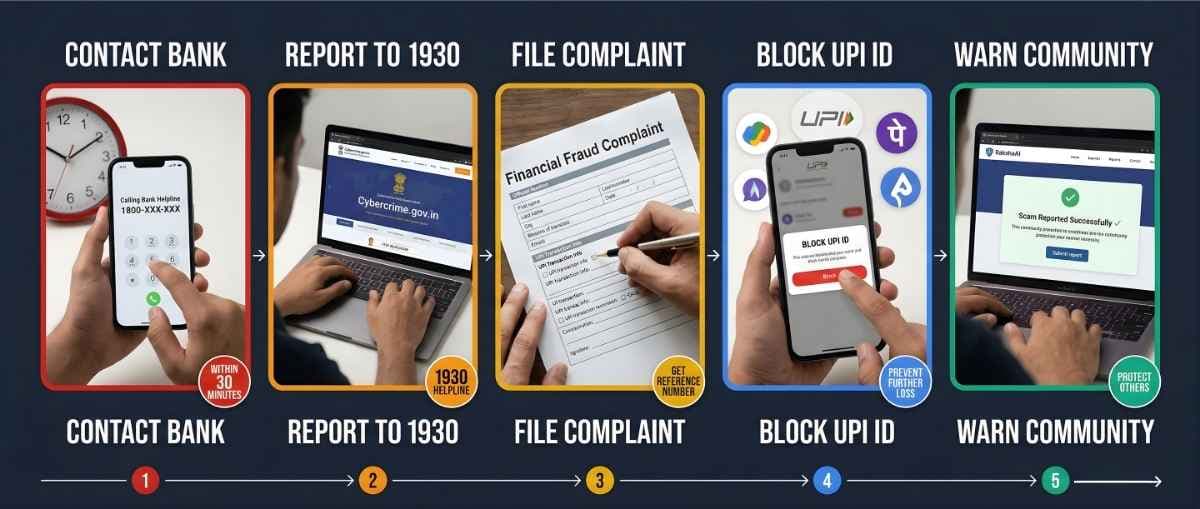
How to Report Investment Fraud in India Step by Step
Speed is critical. Every hour matters for freezing fraudulent accounts and recovering funds.
Call 1930 National Cyber Crime Financial Helpline (If Money Was Transferred)
DO FIRSTThe 1930 helpline operates 24/7 and can initiate an account freeze request on the destination account within minutes. Call 1930 immediately if you transferred any money to a fake trading platform, ponzi scheme operator, or investment scammer. Provide: the UPI ID or bank account you paid, the amount, the time of transfer, and the platform name. Even for wire transfers, 1930 can coordinate with banks to attempt recovery within the golden window.
File on SEBI SCORES Portal + cybercrime.gov.in in Parallel
DO FIRSTFile your complaint on two portals simultaneously: (1) SEBI SCORES portal at scores.sebi.gov.in for investment fraud complaints against SEBI-regulated entities and illegal schemes claiming SEBI registration. (2) cybercrime.gov.in under 'Financial Cyber Fraud' for investment fraud involving digital platforms or apps. Both portals generate case reference numbers within 24 hours.
Report the Platform to RakshaAI
Report the fraudulent trading platform, investment scheme, or broker at rakshaai.co/report-a-scam/. Your report appears in search results for the platform's name and phone number within 4–6 hours, preventing other Indians from losing money to the same scheme. Also verify the platform using RakshaAI's Website Safety Checker the result can be preserved as evidence for your cybercrime complaint.
Contact Your Bank for Chargeback / Reversal
Under RBI Guidelines on Customer Protection (Circular RBI/2017-18/15), banks can initiate chargebacks for fraudulent transactions if reported within 3 days. For UPI transactions, raise a dispute immediately through your bank's app. For NEFT/RTGS/IMPS transfers, contact your bank's fraud team with your cybercrime.gov.in reference number this activates a formal investigation protocol. Recovery probability is highest within the first 48 hours.
File an FIR with Securities and Cybercrime Details
File a physical FIR at your nearest cybercrime police station with all evidence: platform screenshots, payment records, communication records, SEBI SCORES reference, and cybercrime.gov.in reference. Investment fraud violations include: SEBI Act 1992, PFUTP Regulations 2003, Prize Chits and Money Circulation Schemes (Banning) Act 1978, IT Act 2000 Sections 66C and 66D, and IPC Sections 420 and 406. For large amounts, the Enforcement Directorate handles cases involving money laundering.
Recovery Timeline After Investment Fraud
Call 1930 highest probability of account freeze
~40% recovery probability via bank chargeback + SEBI SCORES
File FIR + cybercrime.gov.in case formally opened
Recovery drops below 10% ED involvement for laundering cases
Official Verification Resources
Use these before investing with any platform or advisor
SEBI Registered Intermediaries
sebi.gov.in
Verify brokers, advisors, mutual fund distributors, and portfolio managers
SEBI Complaints (SCORES)
scores.sebi.gov.in
File formal complaints against unregistered or fraudulent investment platforms
Cyber Crime Portal
cybercrime.gov.in
Report investment fraud with transaction history and app evidence
National Consumer Helpline
1800-11-4000
Toll-free helpline for financial and consumer fraud complaints
RBI Sachet Portal
sachet.rbi.org.in
Report unauthorised deposit-taking schemes and Ponzi-style schemes
Cyber Crime Helpline
1930
Call immediately after a fraud to freeze destination bank accounts
Investment Fraud in India Complaint & Loss Data by Type (2025–26)
Source: NCRB Cyber Crime Report 2025 / SEBI Enforcement Report 2025–26
| Fraud Type | % of Complaints | Avg. Loss per Victim |
|---|---|---|
| Fake Trading App India | 34% | ₹1,85,000 |
| Ponzi Scheme India | 22% | ₹3,40,000 |
| Pyramid Scheme / MLM | 18% | ₹65,000 |
| Pig Butchering Scam India | 10% | ₹18,50,000 |
| Binary Options Scam India | 6% | ₹1,20,000 |
| Forex Scam India | 6% | ₹1,80,000 |
| Pump and Dump India | 4% | ₹55,000 |
More Investment Fraud Guides for India
Deep-dive guides for each specific investment fraud type active in India 2026.
Stock Market Tip Scam India 2026: How Fake Tips Steal Your Money
How fraudsters pose as SEBI analysts on WhatsApp and Telegram to push pump-and-dump schemes and steal crores from retail investors.
📱Crypto Investment Scam India 2026: Fake Apps & Rug Pulls
India's most common crypto fraud patterns in 2026 fake exchanges, celebrity deepfake ads, and Telegram investment groups.
💬Telegram Task Scam India: Fake Jobs Stealing Money
How scammers recruit victims via Telegram for 'easy online tasks', extract initial earnings to build trust, then drain wallets.
📊Fake Loan App India 2026: Illegal Lenders & Harassment Tactics
Unregulated lending apps that charge illegal fees, harvest contacts, and harass borrowers. How to identify RBI-registered lenders.
🤖AI Voice Cloning Scam India: When Criminals Clone Your Family
Fraudsters clone voices of relatives to demand emergency money transfers. How the scam works and how to set a family code word.
✅Got Scammed Online? Here's Exactly What to Do
Step-by-step recovery guide call 1930, freeze transactions, file on cybercrime.gov.in, and escalate to RBI Ombudsman.
Frequently Asked Questions About Investment Scams in India
Everything you need to know about investment fraud in India answered plainly.
What are the most common types of investment scams in India in 2026?
How do I check if a trading platform or investment company is legitimate?
What is a ponzi scheme and how do they operate in India?
What is the difference between a ponzi scheme and a pyramid scheme?
Do banks refund money lost to investment scams in India?
How does a fake trading app scam work in India?
What are binary options scams and why is binary trading illegal in India?
How do pump and dump schemes work in India?
What is the pig butchering scam and how does it target Indian investors?
How do I report an investment scam to SEBI in India?
Free Tools to Protect Yourself from Investment Fraud in India
Check any platform, phone number, or UPI ID for free before you invest.
Website Safety Checker
Verify any trading platform or investment website against SEBI's investor alert list and RakshaAI's scam database.
Check a Website →📞Phone Number Checker
Check if a phone number has been reported in connection with investment fraud, fake trading calls, or scam Telegram groups.
Check a Number →💸UPI ID Checker
Verify if a UPI ID or payment address has been flagged in investment fraud or fake broker transactions.
Check a UPI ID →Active Investment Scam Alerts India 2026
12 Fake Platforms Mimicking Angel One and Zerodha
SEBI issued an investor alert for 12 fraudulent trading platforms using interface clones of Angel One and Zerodha. All 12 were distributed via APK download links on Telegram groups. SEBI has referred 6 operators to cybercrime authorities.
'National Investment Club India' 4% Monthly ₹8.2 Crore Collected
A network operating under this name has collected ₹8.2 crore from approximately 2,400 investors across UP, Bihar, and Delhi. Not registered with SEBI, RBI, or MCA. Investors are advised not to make any further payments.
Fake Options Trading Telegram Group ₹180 Crore Frozen
SEBI froze ₹180 crore in assets linked to a Telegram group offering fake options trading signals with 2.4 lakh Indian subscribers. Platform operated from Cambodia. All operators are named in SEBI enforcement proceedings.
LinkedIn IT Professional Targeting Avg Loss ₹24 Lakh
A coordinated pig butchering operation targeting Indian IT professionals on LinkedIn. Average loss per victim: ₹24 lakh. Operation was tracked to South-East Asia. 140+ cases filed across Mumbai, Bengaluru, Hyderabad Cyber Cells.
Protect Your Savings.
Report Investment Fraud.
If you've been approached by a suspicious investment platform, received an unsolicited trading tip, or already fallen victim report it now. Your report can prevent the same fraud from reaching thousands of other families.
🇮🇳 India-focused investment scam guidance · Free consumer access · No registration required