
Digital Arrest in India 2026: Meaning, 7 Types, Warning Signs & How to Report
Digital arrest is a form of cyber extortion in which scammers impersonate CBI, ED, NCB, police, income tax, or customs officials and tell the victim they are ‘under digital arrest’ confined to their home, forced to remain on a video call, and threatened with immediate physical arrest unless they pay to ‘clear their name.’
India recorded over 92,000 digital arrest complaints in 2025, with the Ministry of Home Affairs estimating total losses exceeding ₹2,140 crore making digital arrest the highest per-victim-loss scam type in the country, with average losses of ₹23 lakh per victim. PM Narendra Modi addressed the nation on digital arrest in Mann ki Baat in October 2024, calling it the biggest online threat facing Indians today.
This page explains the digital arrest meaning in full, covers all 7 variants operating in India in 2026, gives the exact psychological tactics scammers use, and provides a step-by-step guide to reporting including the fastest route to financial recovery if you have already paid.
Received a Threatening Call?
Check the number before you pay anything. Most scammer numbers appear in our database within hours of the first report.
Digital Arrest Scam Scale in India 2026 Data
India recorded over 92,000 digital arrest complaints in 2025 alone. The Ministry of Home Affairs estimates total losses of ₹2,140 crore with the average victim losing ₹23 lakh. Complaint growth has exceeded 300% year-on-year from 2023 to 2025, making digital arrest the fastest-growing high-value cyber fraud in India.
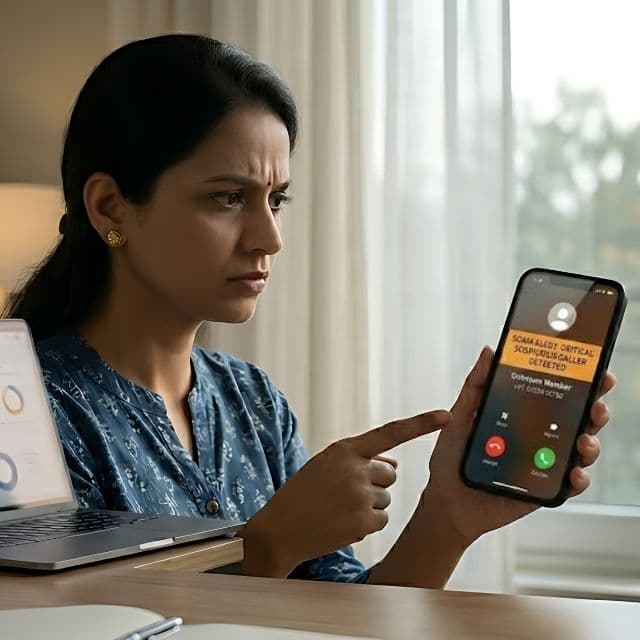
7 Types of Digital Arrest Scams in India 2026
Digital arrest is not a single fraud it is seven distinct impersonation variants, each exploiting a different government authority to manufacture fear.
Fake CBI Officer Scam Criminal Investigation Threat
Caller impersonates a CBI officer, claiming your phone number or bank account is linked to a serious criminal investigation money laundering, terrorism, or drug trafficking. Average loss: ₹18 lakh.
Fake ED / Income Tax Officer Digital Arrest
Scammer poses as Enforcement Directorate or Income Tax Department officer, accusing you of undisclosed foreign assets, GST evasion, or FEMA violations. A fake 'warrant' is displayed via screen share.
Fake NCB / Narcotics Bureau Digital Arrest
Caller claims a package in your name was intercepted containing narcotics, or that your phone number was used to order controlled substances. An arrest warrant is displayed, 'security deposit' demanded.
Fake Customs / DHL Package Scam Digital Arrest Entry
You receive a call that a parcel addressed to you has been seized at customs containing illegal items. The scammer offers to resolve the matter for a clearance fee, then escalates to a digital arrest scenario.
Fake TRAI Disconnect Escalated to Digital Arrest
Starts as a fake TRAI number disconnection threat. When the victim refuses to pay, the scammer transfers the call to a 'cybercrime officer' who then initiates a digital arrest scenario.
Fake Income Tax Raid / GST Audit Digital Arrest
Scammer poses as an Income Tax officer conducting a 'virtual audit' or 'online raid.' Targets professionals, business owners, and salaried taxpayers with fake court orders and tax notices.
WhatsApp Video Call Digital Arrest Fake Courtroom
The most elaborate variant. The entire digital arrest is conducted via WhatsApp video call, with the scammer in a police uniform against a background designed to look like a police station or courtroom.
What Is Digital Arrest? Meaning, Definition & How It Works in India
In October 2024, Prime Minister Narendra Modi dedicated an entire episode of Mann Ki Baat to warning Indians about digital arrest scams. He called it one of the biggest cyber threats facing the country. The RBI, MHA, and TRAI have all issued repeated public advisories. And yet, thousands of educated, aware people fall for it every month.
Why? Because the scam is engineered with terrifying precision. The callers know your full name, your Aadhaar number, your bank name, sometimes even your recent transactions. They appear on video in crisp police uniforms in front of backdrops with government seals. They use proper legal terminology, reference real laws, and send documents that look genuinely official. Your brain, overwhelmed with fear and confusion, starts treating the situation as real.
The fundamental lie at the heart of this scam is a legal impossibility: "digital arrest" does not exist in Indian law. Not in the CrPC, not in the IT Act, not anywhere. No government official CBI, police, ED, TRAI, customs can arrest or detain you via a phone or video call. If someone tells you otherwise, they are a criminal.
Key Facts to Memorise
- "Digital arrest" has zero legal basis in India. It is a made-up term used only by fraudsters.
- CBI, police, ED, and TRAI never initiate investigations over WhatsApp or video call.
- No legitimate authority will ever ask you to stay on a video call for hours or overnight.
- You have the right to end any call and immediately contact your local police station to verify.
- Real investigations always happen in person, with proper written notices served physically.
PM Modi's exact words: "No government agency conducts inquiry like this through video call. This is a big lie." Mann Ki Baat, October 2024
Digital Arrest for UPSC Aspirants GS Paper 3
Internal Security / Cybercrime Exam-Ready Summary
- Definition: Cyber extortion scam where criminals impersonate CBI/ED/police to conduct 'digital arrest' via video call and demand money.
- First formal recognition: MHA advisory, October 2024. Term coined and popularised after PM Modi's Mann ki Baat on October 27, 2024.
- Scale (2025): 92,000+ complaints filed with I4C; estimated losses ₹2,140 crore; average loss per victim ₹23 lakh.
- Legal status: No legal basis in India. Digital arrest does not exist in IPC, CrPC, or IT Act 2000.
- Laws violated by scammers: IPC 419 (impersonation), IPC 420 (cheating), IPC 384 (extortion), IT Act 66C (identity theft), IT Act 66D (computer impersonation).
- Nodal agency: I4C (Indian Cyber Crime Coordination Centre) under Ministry of Home Affairs.
- Reporting mechanism: 1930 helpline (24/7) + cybercrime.gov.in national portal.
- Key PM statement: "No government agency conducts inquiry through video call. This is a big lie." Mann ki Baat, Oct 27 2024.
How Digital Arrest Scams Work in India 3-Stage Playbook
Understanding the exact playbook is your best defense. Every digital arrest scam follows the same three stages.
Stage 1 The Cold Call and Urgency Manufacturing
Digital arrest scams begin with an unexpected call never a scheduled appointment. The caller claims to be from a government authority (CBI, ED, TRAI, customs, income tax, NCB) and states a matter of serious legal consequence requires your immediate attention. The caller knows your name, sometimes your approximate location, and occasionally your Aadhaar number data purchased from compromised databases. The caller ID may match a real government office number through caller ID spoofing technology. This first call screens victims: if you challenge their claims, they disconnect. If you show fear or compliance, the scam escalates immediately.
Stage 2 The Video Call, Fake Documents, and Digital Arrest Declaration
PSYCHOLOGICAL PEAKThe victim is transferred to a WhatsApp video call where a 'senior officer' takes over. The scammer appears in a police or government uniform in front of a background designed to resemble a police station often a pre-recorded video on loop. They display fake arrest warrants, court summons, and FIR documents bearing official seals. The victim is formally told they are 'under digital arrest' and must remain on the call. They are instructed not to speak to family members, not to disconnect, and not to contact anyone outside the call. This isolation prevents the victim from seeking advice that would immediately expose the fraud.
Stage 3 The Ransom Demand and Psychological Coercion
Once the victim is isolated and in fear, the money demand begins. Payment is demanded to 'post bail digitally,' 'clear the investigation,' 'pay a security deposit,' or 'prove innocence.' Payments go to UPI accounts presented as 'government escrow' or 'court clearance accounts.' The psychological pressure is extreme: any delay means physical police will arrive at your address. One documented case in Pune involved a victim held on a video call for 4 consecutive days, losing ₹78 lakh. Once you pay once, they don't stop they use the shame of payment as leverage to demand more.
Got a ‘Digital Arrest’ Call? Check the Number Immediately.
Before you panic, enter the caller's number in RakshaAI's free Phone Number Checker. Most scammer numbers are reported within hours of the first victim call.
"I'm a Doctor. I Thought I Was Smarter Than This." A Real Account
Dr. Meera (name changed), a 51-year-old cardiologist from Bengaluru, received a call on a Tuesday afternoon claiming to be from TRAI. A parcel booked under her Aadhaar had been seized at Mumbai airport. It contained forged passports and 150 grams of MDMA. Her mobile number was being deactivated within the hour.
Then came the "transfer" to a fake Mumbai Crime Branch officer on video. He was in uniform, sitting at what looked like a police station. He had her full name, residential address, PAN number, and the name of the hospital she worked at. He showed her a digital "FIR" with her photo embedded in it.
"I'm a rational person. I've seen scam forwards on WhatsApp dozens of times. But when someone in a police uniform is looking you in the eye, saying your name, your address, your hospital something in your brain just freezes. You stop being a doctor. You become a terrified person trying to prove your innocence."
Over the next 19 hours yes, hours Dr. Meera remained on the video call, alone in her bedroom, forbidden from telling her husband or children. She transferred ₹24 lakh across three transactions, each time believing it was a "refundable security deposit." The demands kept growing.
It was her 18-year-old son, noticing she hadn't come out of her room, who knocked and gently broke the spell. Within five minutes of talking to a real person someone she trusted the illusion collapsed. She filed a complaint within the hour.
The Lesson:
The scam's most powerful weapon is isolation. The moment you talk to a trusted person a family member, a friend, a colleague the psychological grip breaks instantly. That's exactly why scammers forbid it. Break the isolation. Always.
Who Do Digital Arrest Scammers Target?
No one is immune, but scammers do research their targets before calling to maximise their leverage and the amount they can demand.
Professionals & Executives
Doctors, CAs, engineers, corporate employees people who fear reputational damage and are more likely to pay quietly to 'clear their name' rather than risk career exposure.
Senior Citizens
Retired government employees, pensioners they have savings, are less familiar with digital scam patterns, and have an ingrained respect for authority that scammers exploit ruthlessly.
Business Owners
Scammers target GST-registered businesses, linking stock market transactions or import records to supposed money-laundering probes to inflate the 'stakes' and demand larger sums.
NRIs & Expats
People with Indian financial accounts but living abroad are ideal targets they're distanced from local support, unfamiliar with current Indian law enforcement procedures, and often have higher financial capacity.
7 Digital Arrest Warning Signs How to Spot the Scam Immediately
If any of these apply to your call, you are being scammed. Hang up immediately.
Any government authority CBI, ED, police, TRAI, income tax, NCB, customs conducting an investigation or arrest via phone or video call. Real agencies do not work this way.
You are told you are 'under digital arrest' and must remain on the call. This legal concept does not exist in India. No Indian law permits digital arrest of any kind.
You are told NOT to tell your family members, not to contact anyone, and not to disconnect. Real law enforcement never demands secrecy from your own family.
A money payment is demanded to 'clear your name', 'post digital bail', 'settle the investigation', or 'prove innocence'. No real government body collects money via phone or UPI.
You are shown documents, warrants, or court orders on screen during the call. Real legal documents are served by post via registered mail not shared on WhatsApp video calls.
The call demands you share your screen, install a remote access app, or conduct a UPI transaction while the caller watches. This gives scammers access to your banking credentials.
The caller claims your phone number, Aadhaar, or bank account is 'linked to a crime' and that accounts will be 'frozen' or 'confiscated' unless you act immediately. This is a manufactured threat.
Why Your Brain Cooperates With the Scammer
You might think: "I would never fall for this." And this is exactly what the scam preys on. Most victims are confident, educated people which means they also have more to lose reputationally, more shame around the idea of being involved in a "crime," and a stronger psychological need to prove their innocence.
The scam uses a forensic understanding of human psychology. First comes fearthe idea that your name is linked to drugs, trafficking, or terrorism creates immediate panic. Then comes authority a uniformed official with deep knowledge of your personal details signals legitimacy. Then comes isolation cutting you off from anyone who could offer perspective. Finally comes urgency"pay now or be arrested tonight."
These four levers fear, authority, isolation, urgency fire simultaneously and overwhelm the prefrontal cortex's ability to reason. Your brain enters a survival state. Logic becomes secondary to the primal need to make the threat go away.
The single most effective counter to all four levers is one sentence, spoken aloud to another human being: "I just got a call saying I'm under digital arrest." Just saying it out loud to your spouse, child, a colleague, a neighbour immediately introduces a second perspective. And a second perspective is all it takes to break the spell. Every. Single. Time.
The 3-Second Rule:
If any call makes you feel fear, urgency, and secrecy all at once pause for 3 seconds, hang up, and call someone you trust. That's the entire defense.
What Real Investigations Look Like vs. Digital Arrest Scams
Real Government Investigation
- Physical written notice served at your address
- You are given time to consult a lawyer
- You can call the police station to verify any officer
- You are never asked to transfer money as 'bail'
Digital Arrest Scam
- Contact only via phone or WhatsApp video call
- You are told to stay on call and not inform anyone
- Fake FIRs and warrants sent over WhatsApp
- Demands money as 'security deposit' or 'bail'
The Golden Rule
Any "investigation" that happens entirely over a video call with a demand for money is a scam without exception.
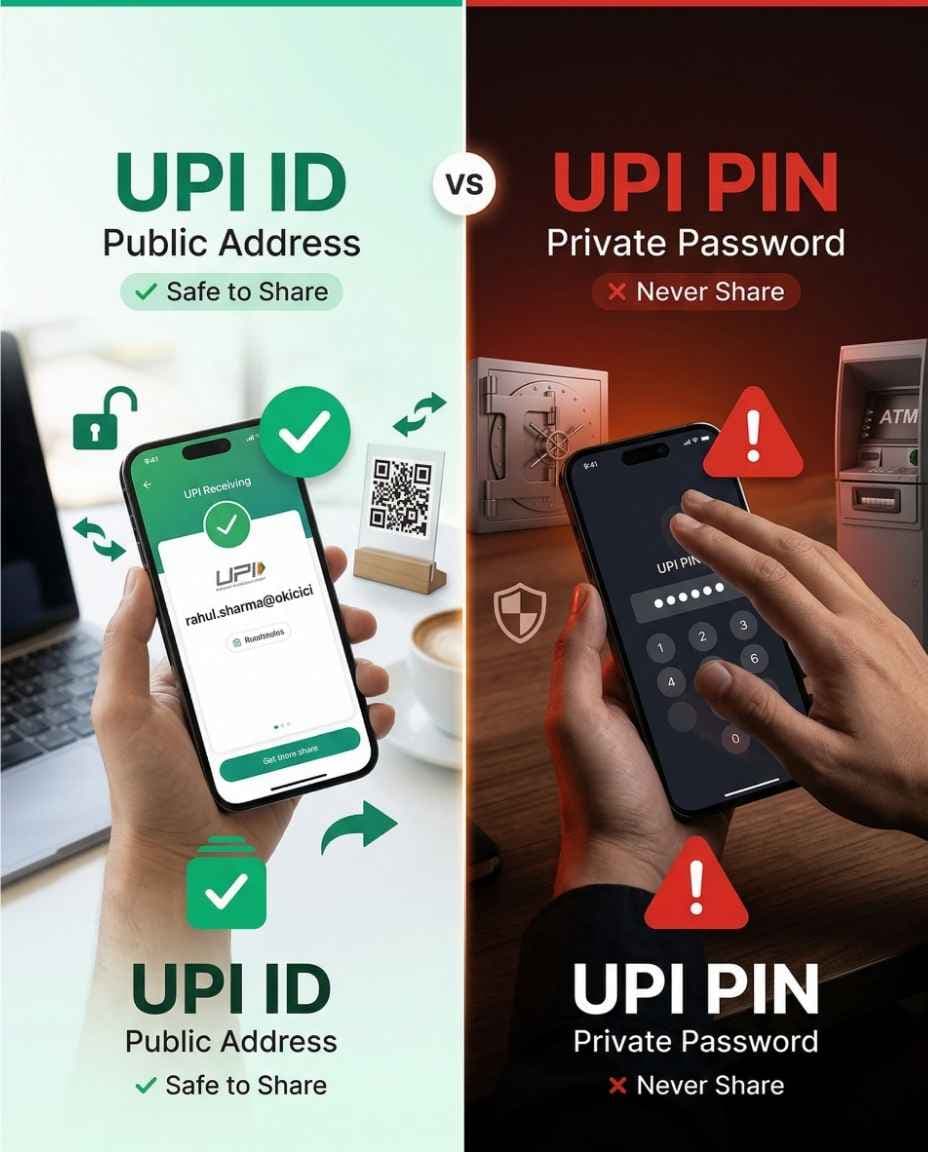
Official Government Position
What India's agencies and courts have formally stated
Digital Arrest Myths vs. Reality
Myth
The caller knew my Aadhaar and bank details, so they must be real officials.
Reality
Your personal data is available on dark web databases from multiple large-scale leaks. Scammers purchase this data cheaply. Knowing your details is not proof of legitimacy it's proof of preparation.
Myth
I can verify if the case against me is real by cooperating first.
Reality
You can verify instantly and for free by simply calling your local police station or checking with a lawyer. You don't need to 'cooperate' with an unknown caller to find out if a case exists against you.
Myth
Hanging up will make the situation worse and result in immediate arrest.
Reality
Hanging up on a scam call cannot result in any consequence. There is no legal mechanism in India for a phone call to initiate an arrest or summons. The threat of 'immediate arrest' is a pressure tactic.
Myth
Paying the 'security deposit' will end the call and the problem.
Reality
The first payment proves you're willing to pay. In most documented cases, victims who paid once were approached multiple times same scammers or new ones who purchased the victim's profile as a 'confirmed payer'.
How Are These Scam Operations Actually Run?
Indian law enforcement agencies the CBI, state cyber cells, and the MHA's I4C division have busted dozens of digital arrest scam operations. The picture that emerges is organised, sophisticated, and often cross-border.
Most operations are run from countries like Cambodia, Myanmar, and Dubai, where Indian nationals are sometimes trafficked and forced to work as scam callers. Others operate from within India in rented flats in tier-2 cities, equipped with ring lights, government seal backdrops, and wardrobes of police/CBI uniforms.
These are not amateur operations. They have HR teams for caller training, technical teams who create fake video call setups that loop on screen (the "police station backdrop" can be a pre-recorded video playing behind the caller), and identity research teams who compile target dossiers from data leaks, LinkedIn profiles, and property records.
Caller Research Teams
Compile target profiles from dark web data and social media before calling
Fake Studio Setups
Pre-recorded police station backgrounds on loop during video calls
Forged Document Teams
Create fake FIRs, warrants and court notices in under 5 minutes
Money Mule Networks
Funds moved through dozens of shell accounts across states within minutes
Why is it so hard to catch them?
Funds are immediately dispersed across multiple mule accounts in different states. By the time a complaint is filed and banks are notified, the cash has already been withdrawn via ATMs or converted to cryptocurrency. Speed of reporting is everything.
Digital Arrest Fraud Breakdown by Type (India 2026)
NCB / narcotics impersonation scams have the highest average loss. Fake CBI calls account for nearly a third of all digital arrest complaints.
| Fraud Type | % of Complaints | Avg Loss Per Victim |
|---|---|---|
| 👮 Fake CBI Officer | 31% | ₹18 Lakh |
| 📊 Fake ED / Income Tax | 24% | ₹22 Lakh |
| 📹 WhatsApp Video Arrest | 18% | ₹28 Lakh |
| 💊 Fake NCB / Narcotics | 12% | ₹31 Lakh |
| 📦 Fake Customs / DHL | 8% | ₹4.5 Lakh |
| 💼 Fake Income Tax Raid / GST | 4% | ₹12 Lakh |
| 📞 Fake TRAI Escalated | 3% | ₹2.1 Lakh |
Source: NCRB / MHA I4C Annual Report 2025–26. Percentages rounded to nearest integer.
Related Guides on Digital Arrest Scams
Detailed breakdowns of each digital arrest scam type real cases, scripts used, and how to respond.
How Fake CBI Officer Scams Work Real Call Scripts & Cases
The most common digital arrest variant. Read the exact scripts scammers use and the 3 phrases that unmask a fake CBI officer immediately.
Fake ED / Enforcement Directorate Digital Arrest Scams 2026
In-depth guide to ED impersonation scams how fake money laundering cases are constructed and why victims comply.
WhatsApp Video Call Digital Arrest How It Works & Real Cases
WhatsApp video is used to create 'visual authority.' Learn why the video call is the most psychologically effective part of the scam.
PM Modi Warns About Digital Arrest Mann ki Baat Summary
PM Modi's October 27, 2024 Mann ki Baat warning on digital arrest: key quotes, MHA advisory, and what changed after the national address.
Fake Customs / DHL Parcel Digital Arrest Scams Complete Guide
The 'your parcel contains drugs' variant how fake customs officers create international urgency and demand clearance fees.
How to File a Cybercrime Complaint in India Step-by-Step
Complete guide to reporting cybercrime: cybercrime.gov.in walkthrough, 1930 helpline, FIR filing, and what happens after you report.
Frequently Asked Questions About Digital Arrest in India
Everything you need to know about digital arrest scams answered clearly.
What is the meaning of digital arrest in India?
Is digital arrest a real law in India?
What should I do if I get a digital arrest scam call?
What is digital arrest for UPSC? How is it covered in exams?
How do I report a digital arrest scam in India?
How do fake CBI officer calls work?
What is a cyber arrest? Is it the same as digital arrest?
Can I recover money lost in a digital arrest scam?
Which government agencies do digital arrest scammers impersonate?
What are the laws against digital arrest scammers in India?
RakshaAI Free Safety Tools
Check numbers, websites, and UPI IDs before you respond it takes under 10 seconds.
Phone Number Checker
Check if a phone number has been reported as a scam number by other Indians. Instant result, no registration.
Website Safety Checker
Verify if a website is safe before clicking a link. Checks for phishing, malware, and fake government sites.
UPI ID Checker
Check if a UPI ID has been flagged for fraud before making any payment. Prevent digital arrest scam payments.
How to Protect Yourself from Digital Arrest Scams 5 Rules
These five rules, if memorised, make you completely immune to digital arrest fraud.
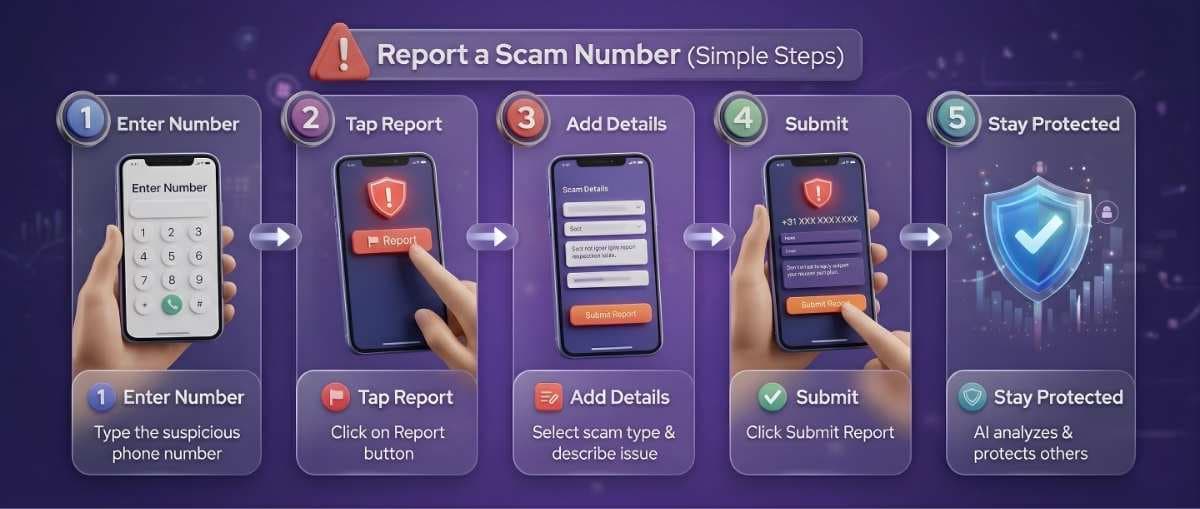
Hang Up Immediately Digital Arrest Is Not Real
DO THIS FIRSTThe single most effective protection: hang up the moment anyone on an unexpected call claims to be from a government agency and says you are under investigation or under arrest. You do not need to verify, explain, or justify yourself. Real CBI, ED, police, or income tax investigations begin with written notices, not phone calls. If you receive such a call, end it immediately.
Tell Your Family Immediately If a Caller Demands Secrecy
DO THIS FIRSTThe instruction not to tell your family is the most critical scam signal. Real law enforcement never demands secrecy from your family as a condition of an investigation. The moment a caller tells you not to speak to your spouse, children, or parents, you are being psychologically isolated for manipulation. Immediately tell a family member a second perspective breaks the fraud in 30 seconds.
Never Transfer Any Money No Real Agency Asks for Money on the Phone
This rule eliminates digital arrest scams financially. As PM Modi stated in Mann ki Baat: no agency of the Government of India asks for money via phone or video call. Every payment demand from a caller claiming to be a government official regardless of how official they appear or what threats they make is fraud. Zero exceptions.
Check the Caller's Number on RakshaAI Before Engaging
If you receive a suspicious call before it escalates, check the number on RakshaAI's Phone Number Checker immediately. Real government agencies in India do not call from mobile numbers CBI, ED, police stations, TRAI, NCB, and income tax offices use landline numbers registered to their offices. Any claim coming from a WhatsApp number, mobile number, or international number is confirmed fraud.
Never Share Your Screen or Install Any Remote Access App
Digital arrest scammers increasingly demand that victims share their phone screen or install apps like AnyDesk, TeamViewer, or QuickSupport under the guise of 'verification.' Screen sharing gives the scammer real-time visibility of your banking apps, OTPs, and personal documents. Remote access apps give them direct control of your device. Never share your screen with an incoming caller.
AI Voice Clone Digital Arrest Scams Surge in Q1 2026
Scammers now using AI-generated voice cloning to impersonate real IPS officers by name. Victims report hearing voices 'identical' to known officers. MHA advisory issued March 2026.
Fake Enforcement Directorate Digital Arrest Wave Q1 2026
I4C reports a 340% surge in fake ED digital arrest calls targeting business owners. Average loss: ₹22 lakh. Callers claim PMLA violations and demand 'compliance fees.'
Fake NCB / Narcotics Digital Arrest Cases Rise 280% (Feb 2026)
WhatsApp video calls impersonating Narcotics Control Bureau officers. Scammers show fake 'drug seizure' documents and demand bail amounts. Highest avg loss of all digital arrest variants.
MHA Reports Deepfake Officers Used in Digital Arrest Scams
Ministry of Home Affairs warns of deepfake video technology being used to create 'live' video calls featuring AI-generated uniformed officers. Real police officers' faces used without consent.
Stay One Step Ahead.
Report Scams. Protect India.
If you've received a digital arrest call or know someone who has report it now. Every report helps RakshaAI and law enforcement track scammer networks, warn others, and make it harder for these criminal syndicates to operate.
🇮🇳 India-focused digital arrest guidance · Free consumer access · No registration required