
Loan Fraud in India 2026: 7 Types, Fake Loan Apps & How to Report
Loan fraud in India is any scheme where a fraudster obtains money or personal data by posing as a legitimate lender, loan recovery agent, or debt collector. It spans fake loan apps, advance fee scams, illegal loan recovery harassment, housing loan fraud, education loan scams, fake debt collector calls, and pre-approved loan spam calls.
Indians filed over 2.4 lakh cybercrime complaints related to loan fraud in 2025 a 58% increase from 2024 with total losses estimated at ₹9,200 crore. Fake loan apps alone accounted for 38% of all financial cybercrime complaints recorded by NCRB.
This page covers all 7 types of loan fraud active in India in 2026, how to identify a fake loan company before you lose money, and the exact steps to report and recover funds if you have already been targeted.
Getting Calls From a Loan Company? Check If They're Legitimate First
CHECK WEBSITE SAFETY FREEWhy Loan Fraud Targets India's Most Financially Vulnerable and the One Rule That Stops It
Loan fraud is uniquely predatory because it targets people in financial distress people who urgently need money and may be repeatedly rejected by legitimate lenders due to low CIBIL scores, no credit history, or informal employment. The promise of 'no CIBIL, instant approval' is specifically calibrated to reach the most vulnerable.
The advance fee model is psychologically powerful: paying ₹2,000 to receive ₹50,000 seems rational. The victim has mentally already received the loan the fee is a small final step. Each subsequent fee follows the same logic, and the sunk cost of prior payments makes stopping harder.
The contact harvesting component adds a second layer of harm the victim is not just financially damaged but exposed to social and professional humiliation, with family and employers receiving threatening messages. Multiple victims of loan app harassment in India have died by suicide.
The One Rule That Cannot Be Broken
No legitimate lender in India bank, NBFC, or microfinance institution ever charges any fee before disbursing a loan.
Processing fees, GST, insurance, and all legitimate charges are deducted from the loan amount after disbursal never collected in advance.
- Any lender asking for money from you before the loan is credited to your account is committing fraud.
- Any app that requires access to your full contact list has no legitimate lending purpose uninstall immediately.
- No government scheme MUDRA, PM SVANidhi, Kisan Credit Card requires advance fees or app downloads from unofficial sources.
- RBI registration is publicly verifiable at rbi.org.in in under 2 minutes the single most reliable safety check.
- Legitimate EMI collection always uses NACH bank mandates or official payment gateways never personal UPI IDs.
How Big Is Fake Loan App Fraud in India Right Now?
Fake loan apps are India's fastest-growing category of cyber fraud in 2024. They target people in genuine financial distress the most vulnerable moment in someone's financial life. Beyond the money, victims face data theft, contact harassment, and blackmail that can destroy careers and relationships.
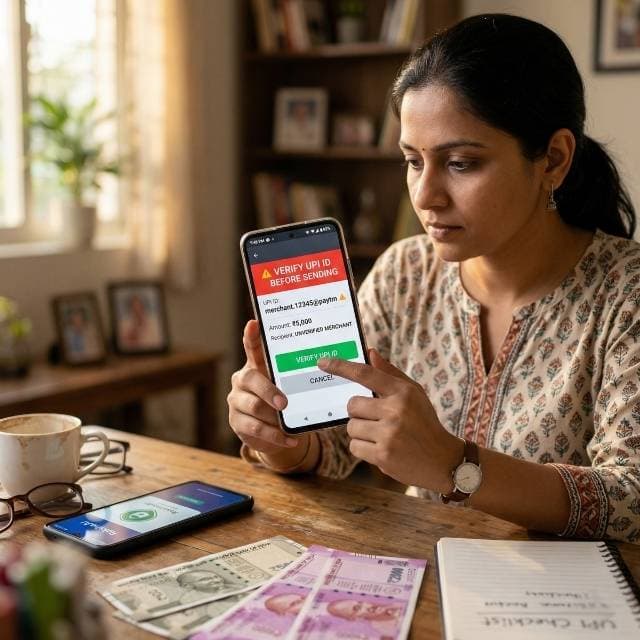
Types of Loan Fraud in India 2026 Complete Guide
Seven active loan fraud types targeting Indians in 2026, ranked by complaint volume and financial risk.
Fake Loan Apps India Illegal Instant Loan Apps
RBI-unlicensed apps offer instant loans with no documentation through the Play Store or direct APK downloads. After collecting Aadhaar, PAN, and contact list access, they disburse a partial amount then demand hidden fees, threatening to share manipulated photos with the victim's contacts.
Full GuideAdvance Fee Scam Processing Fee Before Loan
Scammer poses as a legitimate NBFC or bank offering a pre-approved loan. Before disbursement, they demand an upfront 'processing fee', 'insurance premium', or 'GST deposit'. Once paid, the loan never arrives and the scammer disappears. Average loss: ₹24,000.
Full GuideLoan Recovery Harassment India Illegal Agents
Illegal loan apps use threatening calls, abusive messages, and contact-list shaming to recover money from borrowers or from people who never borrowed at all. Agents impersonate police or lawyers. These recovery tactics are criminal offences under the IT Act 2000.
Full GuideHousing Loan Fraud India Fake Builder Loans
Fraudsters pose as DSAs (direct selling agents) for legitimate banks, collect processing fees and document charges for home loans that are never processed. Fake NBFC impersonation is common in this category, particularly targeting first-time home buyers in Tier-2 and Tier-3 cities.
Full GuideEducation Loan Scams Fake Scholarship and Loan Offers
Scammers contact students offering instant education loans or government scholarship disbursements. They collect advance fees, Aadhaar details, and banking credentials under the pretence of processing loan applications. Targets recently appeared students and families of Class 12 pass-outs.
Full GuideFake Debt Collector Scam Phantom Debt Recovery
Scammer calls posing as a recovery agent for a bank or NBFC, claiming the victim has an outstanding loan they have no knowledge of. They demand immediate payment to 'prevent legal action' or 'clear the record'. Debt collector scams prey on fear of financial consequences.
Full GuideLoan Spam Calls Pre-Approved Loan Telemarketing Fraud
Victims receive calls claiming their 'pre-approved' loan is ready for collection. The call collects banking details, OTPs, or advance fees. This is the phone-based entry point for multiple loan fraud types. See the full guide on spam loan calls at the Phone Scams Hub.
Full GuideHow Loan Fraud Works in India The 3-Stage Playbook
Every loan fraud type from fake loan apps to advance fee scams follows the same three-stage psychological sequence.
Stage 1 Target Selection: Who Scammers Go After
Loan fraudsters in India specifically target people in financial distress those recently rejected by banks due to low CIBIL scores, people with informal employment, first-time borrowers, students awaiting education loans, and small business owners seeking working capital. Scammers reach these targets through Google Ads for terms like "instant loan no CIBIL," WhatsApp and Telegram groups for financial advice, SMS blasts to phone numbers purchased in bulk, and search results for government lending schemes like MUDRA and PM SVANidhi. The targeting is precise: someone searching for a loan at 11 PM on a mobile phone is in a different psychological state than a bank customer walking into a branch during business hours.
Stage 2 The Fake Loan Offer and the Trust-Building Pretext
The fraudulent offer is designed to appear as legitimate as possible. Fake loan apps mimic the design of genuine fintech apps professional UI, RBI compliance claims, and customer support chat. Advance fee scammers produce fake sanction letters on professional letterhead with copied logos of real banks. Housing loan fraudsters impersonate actual bank DSAs. Fake debt collectors read out personal details (often obtained from data breaches) to establish credibility. Education loan scammers reference real government scheme names and timelines. The common thread: enough specific, correct-looking detail to suspend the target's normal scepticism at a moment when they urgently want the scam to be real.
Stage 3 Execution: Fee Collection, Data Theft, and Harassment
The execution phase varies by fraud type. In advance fee scams, each payment unlocks a new "mandatory fee" processing charge, GST deposit, insurance premium, security deposit until the victim stops paying or runs out of money. In fake loan app fraud, data theft happens at the moment of app installation: contacts, gallery, SMS, and location are uploaded to remote servers. The disbursement is either withheld entirely or a partial amount is sent to create legitimacy before escalating interest and fees are extracted. In loan recovery harassment, the data already collected is weaponised threatening calls begin using personal information from the victim's contact list, and bulk messages are sent to family members and employers. The harassment is typically automated and continues regardless of payment made.
Not Sure If a Loan Company Is Legitimate? Check in 5 Seconds
Paste the lender's website URL into RakshaAI's free Website Safety Checker domain age, registration data, and blacklist status checked instantly.
CHECK WEBSITE FREE"They Sent My Edited Photos to My Mother and My Office HR." A Real Account
Deepa (name changed), a 27-year-old private sector employee from Hyderabad, needed ₹40,000 urgently in October 2024 to pay for a family medical emergency. Her bank application was rejected due to low CIBIL score. A Google Ad showed an app called 'QuickRupee Loans' ₹50,000 in 5 minutes, no documents required. She downloaded it.
The app requested access to contacts, gallery, location, and SMS at install. She accepted all permissions. Her loan of ₹50,000 was approved within 3 minutes. Before transfer, she needed to pay a 'processing fee' of ₹2,200. She paid via UPI. The app then showed a 'GST advance deposit' of ₹1,800 required within 30 minutes or the application would expire.
She paid this too. A 'loan insurance premium' of ₹3,500 followed, this time citing 'RBI mandate'. After paying total fees so far: ₹7,500 she was told a 'security deposit of ₹5,000 (fully refundable on first EMI)' was required. She paid. Total paid: ₹12,500.
When she asked for the loan to be cancelled and her fees refunded, the phone number stopped responding. Three days later, her mother received a WhatsApp message containing a morphed image claiming Deepa was a loan defaulter. Her company's HR department received a similar message with her employee ID number.
Deepa filed an FIR at the cyber crime police station. The app was traced to an entity registered in a different name in Gujarat, operating from Myanmar. The UPI IDs used to collect fees had already been closed. Google removed the app within 48 hours of the complaint. Deepa did not recover the ₹12,500 in fees but the harassment stopped after the FIR was filed and her employer was informed of the fraud context.
The Check That Would Have Cost Nothing and Saved ₹12,500:
'QuickRupee Loans' had no entry on the RBI's NBFC list. A 2-minute search at rbi.org.in would have confirmed this before the first payment. The permission request for full gallery access during installation was also a clear disqualifying flag that no legitimate lender would ever require.
What Loan App Permissions Are Legitimate and Which Are Not
RBI guidelines (August 2022) require all lending apps to collect only the data strictly necessary for the credit product, with explicit user consent for each data type. The following table shows what is and isn't legitimate for a regulated Indian lender to request.
The single most reliable indicator of a fake loan app is a request for full contact list access. This has zero legitimate credit assessment use its only purpose is building a list of people who can be contacted for harassment leverage.
| Permission | Legitimate? | Legitimate Purpose |
|---|---|---|
| Camera | ✓ Sometimes | KYC selfie / document capture only |
| Location | ✓ Limited | Address verification only, not continuous tracking |
| Full Contacts | ✗ Never | No legitimate credit use harassment tool |
| SMS Inbox | ✗ Avoid | No RBI-mandated credit use; can capture OTPs |
| Photo Gallery | ✗ Never | No legitimate use harvested for blackmail |
| Call Logs | ✗ Never | Prohibited by RBI 2022 guidelines for lenders |
| Microphone | ✗ Never | No legitimate lending purpose |
Legitimate Lender vs. Fake Loan App Know the Difference
Legitimate Lender
- Registered with RBI as an NBFC or bank verifiable at rbi.org.in within 30 seconds
- Never asks for any fee, deposit, insurance, or GST payment before the loan is disbursed
- Loan app only requests permissions genuinely needed no access to contacts, gallery, or SMS
- Interest rate disclosed clearly as APR (annual percentage rate) in the loan agreement
Fake Loan App
- Not in RBI's authorised list uses fake registration numbers or vague 'RBI compliance' language
- Demands processing fee, GST advance, or security deposit before any money is disbursed
- Requests full access to contacts, photos, and SMS at install uploads data immediately
- Loan is never disbursed or a tiny amount is sent, then massive undisclosed fees are charged
The 60-Second Check
Before paying any fee or granting any app permission: open rbi.org.in and search for the lender's name in the list of authorised NBFCs. If they're not there, stop immediately the loan will never arrive.
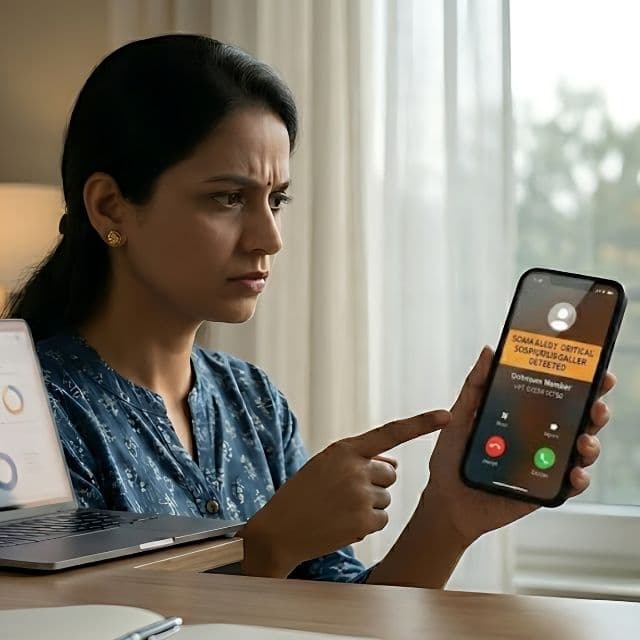
8 Loan Fraud Warning Signs You Should Never Ignore
Any single one of these is sufficient reason to stop and verify before proceeding.
🚨 Stop Immediately If Any of These Apply to Your Loan Application:
Any request for an upfront fee BEFORE the loan is disbursed no legitimate lender, NBFC, or bank asks for processing fees, insurance, GST, or any other payment before releasing funds
The lender is not listed on the RBI NBFC registry at rbi.org.in or is not a scheduled commercial bank check before submitting any documents or payments
The loan app requests access to your contact list, photos, or microphone legitimate financial apps do not require these permissions to process a loan application
You receive a call claiming you have a 'pre-approved' loan you never applied for pre-approval calls from unknown numbers are the standard entry point for advance fee fraud
Recovery agents contact you with threats, abusive language, or say they will share content with your contacts illegal loan recovery tactics are a criminal offence under IT Act 2000
Debt collectors claim you owe money on a loan you have no record of always demand written proof of debt before making any payment to any debt collector
The interest rate quoted is dramatically below market 10% flat rate, 0% personal loan, or 'government-backed' rates these are bait for advance fee and fake loan traps
You are asked to transfer money via UPI to a personal account or an account not matching the lender's official company name all legitimate lenders collect payments to named company accounts only
How to Protect Yourself from Loan Fraud 5 Rules
Five actionable rules that block every type of loan fraud covered on this page.
Rule 1: How to Check If a Loan Company Is Legitimate 3 Ways
Before submitting any documents or paying any fee: (a) Search the lender's name on the RBI NBFC registry at rbi.org.in/Scripts/BS_NBFCList.aspx if they are not listed and not a scheduled bank, stop immediately. (b) Run the lender's website through RakshaAI's free Website Safety Checker domain age under 12 months is a critical warning sign for fraudulent lending entities. (c) Search their Company Identification Number (CIN) on MCA21 at mca.gov.in unregistered entities have no legal standing to offer loans.
Rule 2: Never Pay Any Fee Before Loan Disbursement
This is the single rule that blocks all advance fee fraud. No legitimate lender in India no scheduled bank, no RBI-registered NBFC, no microfinance institution collects any payment from a borrower before the loan is credited to their account. Processing fees, insurance charges, and GST are all deducted from the disbursed loan amount. Any entity requesting money from you before disbursing a loan is operating a fraud.
Rule 3: Use Only RBI-Approved Loan Apps
Before downloading any loan app: (a) Verify the parent company on the RBI NBFC registry. (b) Read the permissions the app requests at install any app that requires contacts, gallery, or microphone access should be immediately rejected. (c) Read reviews beyond the first page fake apps often have a suspicious burst of 5-star ratings. The RBI has published multiple advisories warning against loan apps not linked to a regulated entity. The Play Store presence of an app does not confirm its legitimacy.
Rule 4: Know Your Rights Against Illegal Loan Recovery
Under RBI's Fair Practices Code and IT Act 2000, loan recovery agents cannot: make calls before 8 AM or after 7 PM; use abusive or threatening language; contact your family, employer, or contacts; share any personal information with third parties; or threaten legal action without initiating actual proceedings. If any of these happen, immediately file on cybercrime.gov.in, call 1930, and file an FIR. The harassment is a criminal offence carrying potential imprisonment under IT Act Sections 66C and 66D.
Rule 5: Verify Debt Before Paying Any Debt Collector
If you receive a call from someone claiming you have an outstanding loan: (a) Request written confirmation of the debt, the original lender's name, and the caller's employee ID. (b) Contact the original lender directly using the number on their official website not the number provided by the caller. (c) Check the caller's number on RakshaAI's Phone Number Checker to see if it has been reported as a scam. Never pay any debt collector who cannot or will not provide written proof of the debt and original lender confirmation.
How to Report Loan Fraud in India Step by Step
If you have paid money to a fake loan company, follow these five steps in order. Speed is critical recovery probability drops with every hour.
Call 1930 if Money Was Transferred
DO FIRSTThe 1930 helpline can initiate an account freeze request within minutes. Call immediately if you transferred any money processing fee, insurance, GST deposit, or loan repayment to an unofficial account. Provide the recipient's UPI ID, amount, time of transfer, and company name. The 1930 helpline operates 24/7 and is the fastest route to a temporary hold on the destination account.
File on cybercrime.gov.in
DO FIRSTSelect 'Report Financial Cyber Crime.' Attach screenshots of all conversation records (WhatsApp, SMS, calls), the lender's website or app screenshots, payment receipts, and the company's claimed details. For loan recovery harassment cases, select 'Cyber Crime Against Women/Children' if intimate content was threatened or shared. A reference number is issued within 24 hours.
Report the App to Play Store and RBI
For fake loan apps: report immediately on Google Play Store ('Flag as inappropriate' > 'Financial fraud'). File a complaint with RBI's Sachet portal at sachet.rbi.org.in specifically designed for reporting unauthorised lending entities. RBI's NBFC Ombudsman can be reached at rbi.org.in for complaints against registered but misbehaving NBFCs.
Dispute Payment with Your Bank
If money was transferred via UPI, raise a dispute immediately through your bank's app or by calling the bank's 24/7 fraud line. Act within 24 hours for the best recovery chance. Provide your cybercrime.gov.in reference number to the bank this activates a formal investigation protocol. Under RBI guidelines, banks must respond to fraud disputes within 48 hours.
File an FIR at Your Nearest Cybercrime Police Station
A physical FIR strengthens your case for financial recovery and activates police investigation. Bring printed copies of all conversation screenshots, the company's details, payment receipts, and your cybercrime.gov.in reference number. For loan recovery harassment cases, bring call logs showing the number and nature of threatening calls.
Recovery Timeline Act Fast
Within 30 min
Call 1930 highest recovery chance
Within 1 hour
File on cybercrime.gov.in
Within 24 hours
Bank dispute + Sachet RBI complaint
After 48 hours
FIR recovery drops below 15%
Report This Loan Scam and Warn 2 Million+ Indian Users
Your report helps us block this lender for every future victim who checks it on RakshaAI.
Loan Fraud in India 2026 Statistics by Type
Based on NCRB cybercrime data, RBI enforcement reports, and complaint volumes on the National Cyber Crime Portal.
| Fraud Type | % of Complaints | Avg. Loss per Victim |
|---|---|---|
| Fake Loan Apps India | 38% | ₹18,400 |
| Advance Fee Scam | 24% | ₹24,000 |
| Loan Recovery Harassment | 18% | ₹9,200 |
| Housing Loan Fraud | 8% | ₹82,000 |
| Education Loan Scams | 5% | ₹31,000 |
| Fake Debt Collector Scam | 4% | ₹14,500 |
| Loan Spam & Phone Scams | 3% | ₹6,800 |
More Loan Fraud Guides for India
Deep-dive pages on each fraud type covered in this guide.
Frequently Asked Questions About Loan Fraud in India
Honest answers to the most common questions about fake loan apps and loan fraud in India.
What are the most common types of loan fraud in India in 2026?
How to check if a loan company is legitimate in India?
What should I do if a loan app is harassing me with threatening calls?
How do I identify a fake loan app in India?
What is an advance fee scam and how does it work?
How do I verify if a debt collector calling me is legitimate?
Can I get my money back after paying a loan scammer?
What are education loan scams in India and who do they target?
What is predatory lending and which loan apps in India practice it?
How do I report a fake loan company to the RBI and cybercrime authorities?
Free Safety Tools Check Before You Pay
Verify any lender, number, or UPI ID instantly. All tools free, no registration required.
Website Safety Checker
Check if a loan company website is legitimate before submitting any documents.
Check a Website →Phone Number Checker
Check if a lender's number or recovery agent's number has been reported as fraud.
Check a Number →UPI ID Checker
Verify any UPI ID before transferring loan fees or payments to an unknown account.
Check a UPI ID →Recent Loan Fraud Alerts India 2026
Active scam patterns flagged by RakshaAI users in the last 90 days.
Fake RBI Pre-Approved Loan SMS Campaigns
Fraudsters sending bulk SMS claiming to be from RBI offering pre-approved limits up to ₹10 lakh. The RBI never directly disburses loans to individuals any such claim is an advance fee fraud.
New Loan App Category: "Salary Advance" Apps
New category of fake loan apps posing as employer-linked salary advance schemes. Apps request payslip uploads to steal employer credentials and commit identity fraud at the workplace.
Loan Recovery Harassment via WhatsApp Profile Abuse
Victims report recovery agents downloading their contact list via harvested app permissions, then sending derogatory messages to all contacts. If this happens, file a cybercrime complaint under IT Act Section 67 immediately.
Fake NBFC Registration Certificates in Circulation
Multiple fraudulent lending companies found using forged RBI NBFC registration certificates. Always verify the NBFC registration number directly on RBI's official portal at rbi.org.in, not from a certificate provided by the company.
Got a Loan Offer You're Unsure About?
Check It Before You Pay Anything.
Check any loan company's phone number or website on RakshaAI before transferring a single rupee. Or report a loan scam to protect the next person from the same app.
🇮🇳 India-focused loan fraud guidance · Free consumer access · No registration required