
Advance Payment Scam India 2026
A seller asks for full payment, token money, shipping deposit or booking advance by direct UPI outside the platform. Once paid, the listing disappears, the seller blocks you and the order never ships.
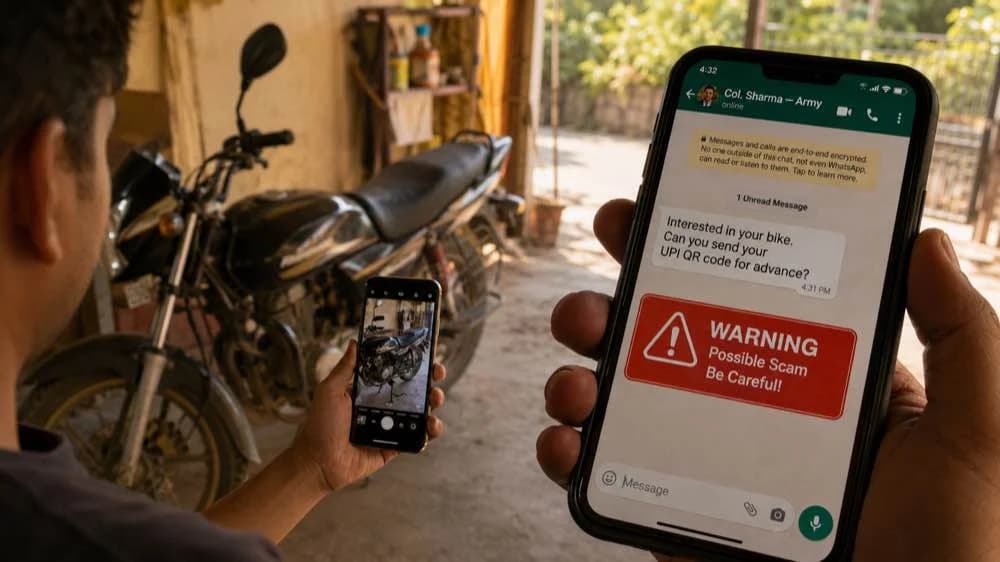
E-commerce fraud complaint share cited for advance payment traps in the source brief
Average loss pattern for advance payment fraud victims in the source brief
Most common platform context cited for person-to-person advance payment traps
Preventable when buyers refuse off-platform direct payment
Why Off-Platform Advance Payment Is the Trap
The seller is not trying to avoid fees. They are trying to avoid buyer protection.
Platform checkout creates an order trail and dispute route. Direct UPI to an unknown seller is treated like a voluntary transfer, so recovery depends on speed, evidence and escalation.
3 Advance Payment Trap Variants
Product advance on OLX and Facebook Marketplace
A desirable product is listed below market price. The seller asks for a small advance to hold the item, then demands the balance before shipping or disappears.
Token money for bookings and services
A fake travel agent, photographer, caterer, event vendor or rental provider asks for token money to confirm the booking, then vanishes on the service date.
Army, government officer or NRI seller persona
The scammer builds trust with fake ID cards, official-looking language and urgency, then asks for shipping, courier or transfer advance.
How the Scam Works - 3 Stages
Stage 1 - Listing builds credibility
The seller uses a legitimate platform, stolen photos, a realistic product description and a tempting price to make the listing feel trustworthy.
Stage 2 - Conversation moves off-platform
The seller asks you to continue on WhatsApp or phone, then presents direct UPI or bank transfer as faster or cheaper than platform payment.
Stage 3 - Payment collected, seller disappears
After the transfer, the listing is deleted, the number stops responding, the tracking link is fake and the platform says payment happened outside its protection.
Real India Case Patterns
OLX motorcycle advance
Seller takes a hold amount, sends a fake RC copy and then demands the remaining balance before transport.
Facebook Marketplace laptop
The seller moves the buyer to WhatsApp, claims platform payment is down and asks for bank transfer. No laptop ships.
Fake army officer sale
A person posing as an officer sends fake ID and asks for courier or base dispatch payment for household goods.
Instagram tour package
A fake agency collects token money for travel booking and becomes unreachable on the travel date.
NRI iPhone seller
A seller creates urgency around flying abroad and pushes full payment before inspection or handover.
Partial advance trust trap
A cheap item is shipped first to build trust, then the seller demands the full balance for the actual product.
8 Warning Signs Before You Pay Advance
- 1The seller asks you to pay or continue conversation outside the platform.
- 2The price is far below market value and the explanation is emotional or urgent.
- 3The seller refuses in-person inspection for high-value items.
- 4Direct UPI or bank transfer is the only accepted payment method.
- 5The seller cannot verify a real business, GST, MCA record, office address or consistent digital footprint.
- 6The listing, profile or WhatsApp number is new, recently changed or difficult to search online.
- 7The seller sends fake ID cards, army documents, courier slips or tracking links to build trust.
- 8A small item or proof is sent first, then a much larger payment is demanded.
5 Steps to Verify Any Seller Before Paying Advance
Meet in person for high-value items
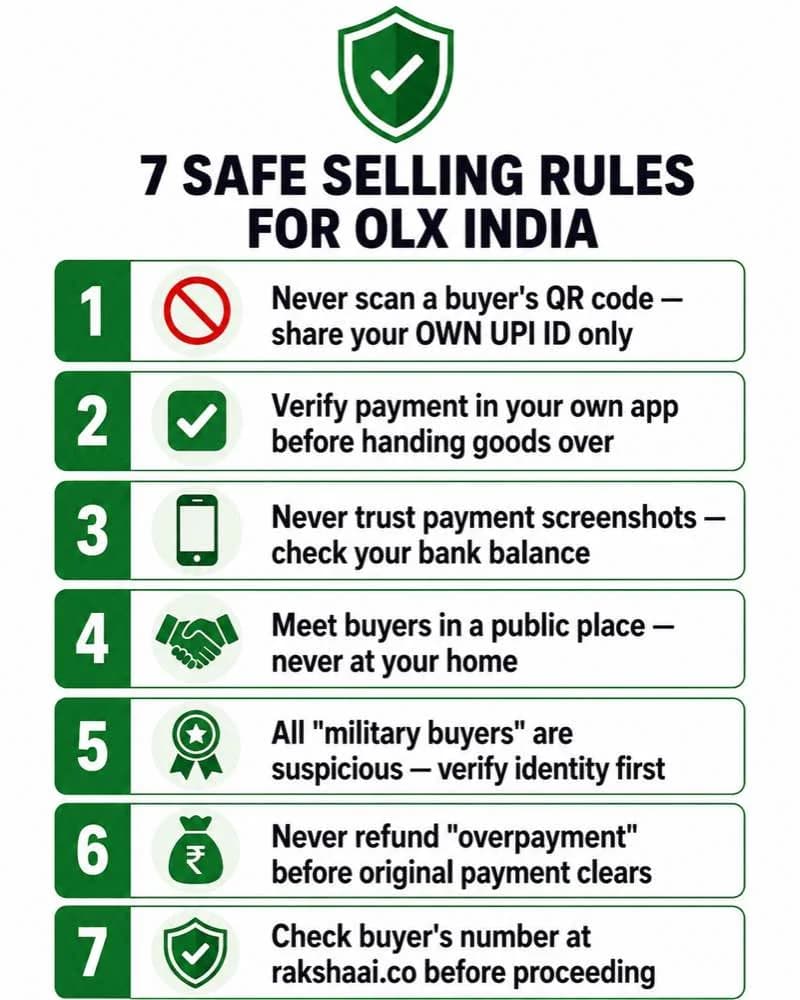
For items above Rs 10,000, inspect the product in a public place and pay only at handover. No shipping advance, no hold deposit, no remote trust deal.
Verify business sellers on official records
Check company registration, GST details, registered office, reviews and independent search results before paying any token amount.
Check seller UPI ID and phone number
Search the UPI ID and phone number before any transfer. Advance payment scammers reuse identifiers across victims before abandoning them.
Use platform or escrow payment
If the platform offers protected payment, use it. If the seller refuses, that refusal is the warning sign.
Check seller website or listing URL
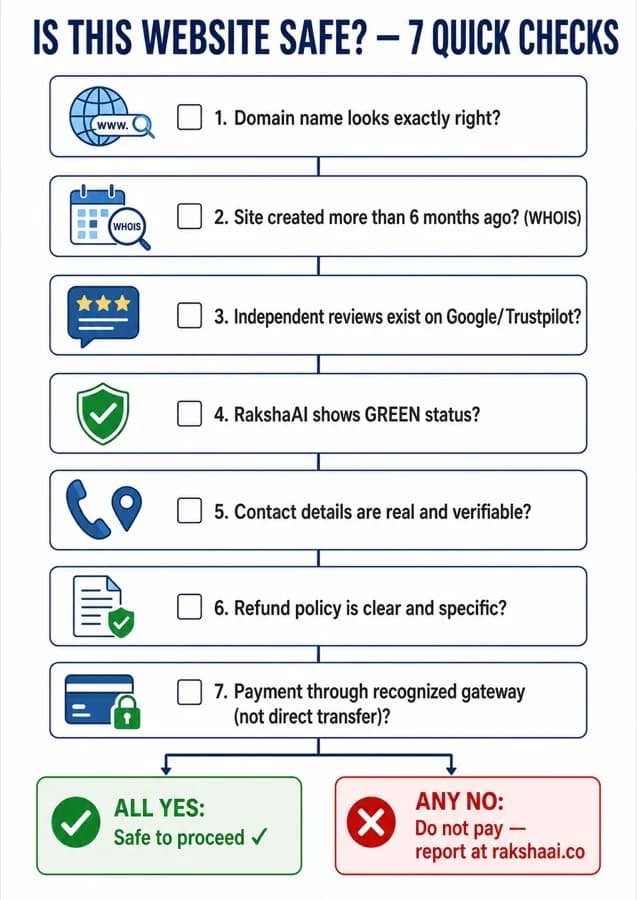
For service providers and business sellers, check domain age, reviews, safety flags and contact details before paying token money.
What to Do If You Already Paid
Speed matters. The fastest route is to call 1930 before the scammer withdraws or moves funds.
Call 1930 immediately
If you paid by UPI or bank transfer, call 1930 quickly with UPI ID, account number, amount, transaction time and seller contact details.
File on cybercrime.gov.in
Attach listing screenshots, chat records, payment proof, fake tracking links, profile URLs and any ID cards or documents the seller sent.
Raise chargeback for card payments
If payment was by card or protected gateway, ask your bank for a goods-not-delivered chargeback and provide the complaint reference.
Report the platform listing
Report the seller on OLX, Facebook Marketplace, Instagram, WhatsApp or the platform where the first contact happened.
File consumer forum complaint and FIR
For significant loss, call NCH 1915, file at consumerhelpline.gov.in and file an FIR for cheating or impersonation.
Report to RakshaAI
Report the seller UPI ID, phone number, profile and website so other Indian buyers can search and find the warning.
Recovery Timeline
Within 30 min
Call 1930 and try to freeze the destination account before funds move.
Within 24 hrs
File cybercrime complaint, preserve evidence and report the platform listing.
Within 72 hrs
Call NCH 1915, start chargeback if card was used and report fake domains or profiles.
Within 7 days
File FIR for high-value cases, impersonation or fake government or army identity.
Within 120 days
Complete card chargeback process where applicable.
Free Tools to Verify Before Paying
Related E-Commerce Fraud Guides
E-Commerce Fraud Hub
The parent guide for fake stores, marketplace scams, COD fraud and online shopping recovery steps.
Fake Marketplace Seller Fraud
Use this when payment happened through a marketplace but the seller never shipped or faked delivery.
Social Media & WhatsApp Shopping Scam
Use this when the seller came through Instagram, WhatsApp, Facebook Marketplace, Telegram or YouTube.
Phantom Delivery Scam
Use this when you paid on-platform but tracking says delivered and nothing arrived.
Investment & Job UPI Fraud
Use this when advance payment is for a job, task, trading scheme or investment opportunity.
Frequently Asked Questions
What is an advance payment scam in India?
An advance payment scam is when a seller asks you to pay upfront by direct UPI or bank transfer before delivery, then disappears after collecting the money.
Is it safe to pay advance to an online seller?
Only through a protected platform payment or escrow system. Direct UPI or bank transfer to an unknown seller removes most buyer protection.
How do I identify a genuine seller before paying advance?
Meet in person for high-value items, verify business records, check UPI ID and phone number, use platform payment, and verify seller website or listing URL.
What is token money scam?
Token money scam happens when a fake service provider or seller collects a small booking amount to reserve a product, event, rental or trip, then disappears.
What is the army officer advance payment scam?
A scammer poses as an army officer, government employee or NRI seller, sends fake IDs or emotional reasons, and asks for shipping or transfer advance.
How do I recover money after advance payment fraud?
Call 1930 immediately, file on cybercrime.gov.in, raise chargeback for card payments, report the platform listing, file NCH or consumer forum complaint, and file FIR for high-value cases.
How is advance payment trap different from fake online store scam?
Advance payment trap is a person-to-person seller asking for direct payment. Fake online store scam uses a full fraudulent website and checkout flow.
Should I trust partial delivery before paying the balance?
No. Scammers may ship a cheap item first to build trust, then demand a much larger balance for the real product that never ships.
Safe Payment Summary
Inspect first, pay through protected channels and refuse direct UPI advance to unknown sellers. If advance payment is unavoidable, prefer card or escrow, never personal UPI.