
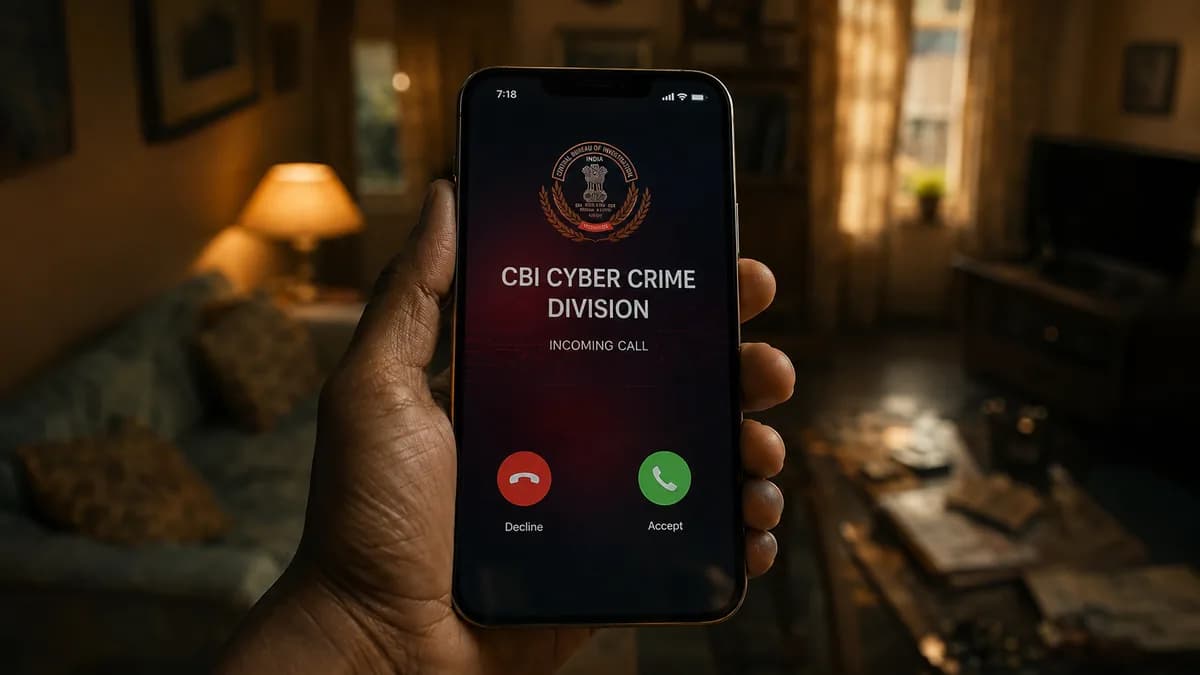
Scammers impersonate CBI, ED, and NCB officers. This call is fake. Digital arrest does not exist in Indian law.
Your phone rings. An official-sounding voice announces they are calling from the CBI Cyber Crime Division. They say your Aadhaar number is linked to a money laundering case. Your mobile SIM is being used for illegal activities. And unless you cooperate immediately by staying on the call, sharing your screen, and transferring money to a "safe account", you will be digitally arrested.
It sounds terrifying. It is designed to. And it is completely fake.
The digital arrest scam is India's fastest-growing financial fraud in 2026. It has already cost victims thousands of crores. This guide tells you exactly what it is, how it works, and what to do in the next five minutes if you receive that call.
If you received this call right now, do this:
- 1Hang up immediately. There is no such thing as digital arrest in India
- 2Do not call back the number
- 3Tell a trusted family member right away
- 4Call the Cybercrime Helpline: 1930
- 5File a complaint at cybercrime.gov.in
- 6Check the number on RakshaAI (rakshaai.co)
Report within 30 minutes for the best chance of money recovery.
What Exactly Is a Digital Arrest?
Digital arrest meaning: A digital arrest is a psychological manipulation tactic where scammers pose as law enforcement officials (CBI, ED, NCB, TRAI, or Customs) and falsely claim you are under legal investigation. They demand you stay on a continuous phone or video call (your "digital arrest") until you pay money to avoid prosecution.
This is not a legal concept. It does not exist in Indian law. No provision in the Indian Penal Code, CrPC, BNSS, or IT Act permits arrest via phone or video call. The Ministry of Home Affairs (MHA) has issued multiple advisories explicitly stating this.
As Prime Minister Narendra Modi stated in Mann Ki Baat (October 2024): “Digital arrest has no provision in the law.”
The entire premise of a “digital arrest” is fabricated. The goal is simple: keep you in a state of fear long enough to transfer money.
How the Digital Arrest Scam Works: Step by Step
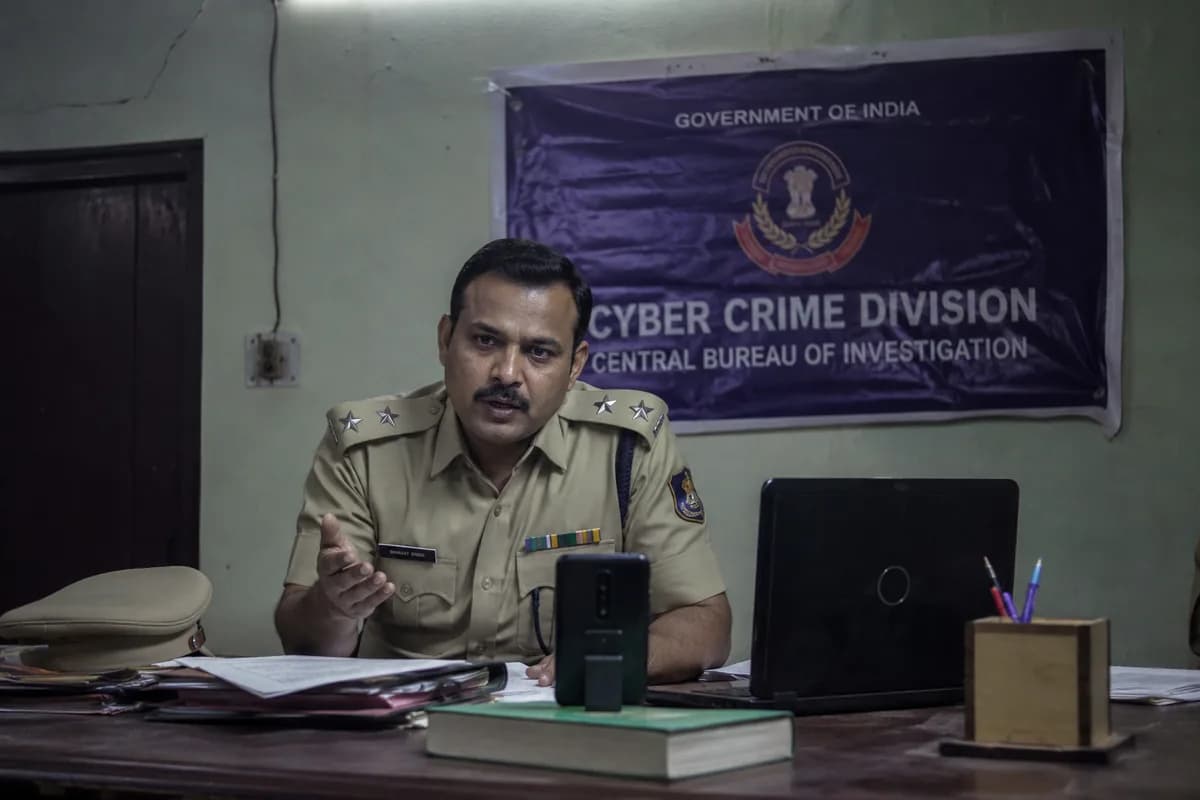
Scammers use fake uniforms, official-looking offices, and fabricated CBI banners on video calls to appear legitimate.
Understanding the playbook is your best defence. Here is exactly how the digital arrest scam unfolds:
Step 1: The First Call and Building Fear
The call begins with a recorded or live voice identifying themselves as an officer from TRAI, Customs, the ED, or CBI. They reference specific, real-seeming details like your full name, city, sometimes even partial Aadhaar digits obtained from data leaks. They claim your number was used for illegal activity: drug trafficking, money laundering, or a terror case.
The goal at this stage is simple: make you afraid enough to stay on the call.
Step 2: The Escalation
The call is “transferred” to a senior officer, often on a video call. The scammer appears in uniform in front of a backdrop that looks exactly like a real government office, with official banners, seals, and sometimes a second “officer” in frame for added legitimacy. They show you fabricated arrest warrants, FIRs, and Supreme Court seals, all professionally designed fakes.
Step 3: The Digital Arrest
They tell you that you are now “under digital arrest.” This means you must stay on the call continuously and must not contact anyone, including family members. Leaving the call or contacting others, they say, will result in immediate physical arrest. This phase can last hours, even days in some documented cases.
Step 4: The Money Transfer
The “investigation” finds that your accounts are linked to criminal funds. To “protect” your money while the inquiry runs, you are instructed to transfer funds to a “safe RBI-approved account” or pay a “bail bond”. The amount often starts small and escalates as victims comply. Transfers go to mule accounts that are emptied within minutes.
Step 5: Disappearance
Once the money is transferred, or once the victim refuses, the scammers vanish. The phone numbers are disconnected. The WhatsApp accounts are deleted. The money is gone.
Real Cases from 2026: The Scale of This Problem
The digital arrest scam is not a fringe crime. It is one of the highest-value fraud categories tracked by India's Cyber Crime Coordination Centre (I4C):
- ₹1,616 crore lost to digital arrest scams in just the first quarter of 2024 (MHA data)
- A retired IAS officer in Noida lost ₹2.2 crore over six days on a video call with fake CBI officers
- A Bengaluru woman was held on a continuous video call for five days and transferred ₹4.3 crore to “protect” her accounts
- In 2026, scam syndicates operating from Myanmar, Laos, and Cambodia are running these operations at industrial scale with hundreds of agents and full production setups
These scammers do not look like scammers. They have professional studios, real-looking uniforms, and scripted responses for every objection you raise. The production quality is frightening.
Year-wise Growth: How Digital Arrest Scams Exploded in India (2022–2025)
Official data from India's Ministry of Home Affairs (MHA) and the Indian Cyber Crime Coordination Centre (I4C) shows an almost vertical growth curve. What started as a niche tactic in 2022 became one of the most financially devastating cybercrime categories by 2024.
| Year | Cases Reported | Total Money Lost | YoY Change |
|---|---|---|---|
| 2022 | ~40,000 | ₹91 crore | Baseline |
| 2023 | ~60,676 | ₹339 crore | +272% loss |
| 2024 | ~1,23,672 | ₹1,935 crore | +470% loss |
| 2025 | Ongoing (higher) | Part of ₹22,495 Cr total cybercrime | Data collecting |
Source: MHA Annual Report 2024–25, I4C Cybercrime Data, National Cybercrime Reporting Portal (NCRP).
Complete Timeline: Every Major Digital Arrest Scam Case in India (2023–2025)
Below is a date-wise chronicle of the most significant documented digital arrest cases in India, drawn from verified news reports. The victims span every profile doctors, IIT professors, retired officers, business magnates, and elderly citizens proving that no one is immune.
| Date | Victim / Location | Amount Lost | Agency Impersonated | Duration |
|---|---|---|---|---|
| Nov 13, 2023 | 50-yr-old woman · Noida, UP | ₹11.11 lakh | Fake Mumbai Police / TRAI drug-package claim | 1 day |
| Late 2023 | 33-yr-old woman · Delhi NCR | ₹20 lakh+ | Fake Supreme Court deepfake CJI Chandrachud "video trial" | Multi-day |
| 2023 | 84-yr-old textile magnate · Mumbai | ₹7 crore | Fake ED / CBI linked to Naresh Goyal money laundering claim | Several days |
| Feb–Apr 10, 2024 | Lakshmi Ramamurthy, 74 · Bengaluru | ₹24 crore | Fake CBI / ED 26 transfers, 6 persons arrested | ~2 months |
| Mar 4, 2024 | IT engineer · Noida, UP | ₹3.75 lakh | Fake Customs Officials parcel with SIM cards | Hours |
| Aug 1, 2024 | Dr. Ruchika Tandon, SGPIMS Assoc. Prof. · Lucknow | ₹2.81 crore | Fake TRAI / CBI illegal SIM issuance claim | Multi-day |
| Aug 10–14, 2024 | Maj. Gen. N.K. Dheer (Retd.) · Noida | ₹2 crore | Fake Narcotics / Customs / CBI / Mumbai Police | 4–5 days |
| Aug 19–Oct 8, 2024 | Businessman, 72 · Mumbai | ₹58 crore | Fake ED / CBI 26 accused arrested, biggest single-victim case of 2024 | ~40 days |
| Aug 28–29, 2024 | S. P. Oswal, Vardhman Group CMD, 82 · Ludhiana | ₹7 crore | Fake Supreme Court / ED "virtual bench" deepfake of CJI | 2 days |
| Sep 15, 2024 – Mar 26, 2025 | IT professional, 57 · Bengaluru (Indiranagar) | ₹31.83 crore | Fake DHL / CBI Karnataka's biggest digital arrest case, 187 transfers | 6+ months |
| Sep 28, 2024 | Prof. Qamar Jahan, AMU · Aligarh, UP | ₹75 lakh | Fake ED 21 accounts used for transfers | 10 days |
| Oct 2024 | Bharati Bai Agarwal (67) + family · Hyderabad | ₹5.5 crore | Fake TRAI / CBI targeted mother and daughters simultaneously | 17 days |
| Nov 10, 2024 | Retired engineer, 70 · Delhi | ₹10 crore | Fake CBI one of the fastest large-value digital arrests on record | ~8 hours |
| Dec 26, 2024 – Mar 3, 2025 | Woman, 86 · Mumbai | ₹20.25 crore | Fake CBI / ED global syndicate, funds traced abroad | ~10 weeks |
| Mar 2025 | Elderly couple · Belagavi, Karnataka | ₹50 lakh | Fake police couple died by suicide after losing life savings | Multi-day |
Sources: The Hindu, Times of India, Hindustan Times, The Federal, News Karnataka, The420.in, ETV Bharat, OpIndia, and NCRP official data. All amounts are as reported by respective news outlets.
Documented Digital Arrest Cases Reported by Indian News Outlets
These are real, verified incidents covered by India's leading news organisations. Every one of them started with a single phone call from a “government officer.”

Bengaluru IT Professional Makes 187 Transfers, Loses ₹31.83 Crore
A 57-year-old from Indiranagar was placed under Skype "digital house arrest" after a fake DHL call. Over 6 months she made 187 bank transfers totalling ₹31.83 crore, believing the money would be returned after RBI verification.

74-Year-Old Bengaluru Woman Loses ₹24 Crore 26 Transfers, 23 Mule Accounts
Lakshmi Ramamurthy, 74, was coerced by fake CBI and ED officials into 26 transfers across 23 mule accounts in 10 banks. Karnataka State Cyber Command arrested 6 accused across 5 states and recovered over ₹5.5 crore.

86-Year-Old South Mumbai Woman Loses ₹20.25 Crore Over 2 Months
Fraudsters told the 86-year-old her Aadhaar was misused in a money-laundering case and threatened to arrest her daughter. The scam ran Dec 26, 2024–Mar 3, 2025. Mumbai Police uncovered a global fraud network behind it.
Retired Major General NK Dheer Liquidates FDs & Mutual Funds, Loses ₹2 Crore
Maj. Gen. NK Dheer (Retd.) of Sector-31, Noida was kept under WhatsApp "digital arrest" for 5 days by fake Narcotics, CBI, and Mumbai Police officers. He liquidated all his FDs and mutual funds before alerting Noida Cyber Crime Police.
Hyderabad Family Under 24-Hour Skype Surveillance for 17 Days, Loses ₹5.5 Crore
Bharati Bai Agarwal (67) and daughters were trapped on Skype by fake TRAI and CBI officers for 17 straight days daughters only allowed to leave for exams. Scammers extracted ₹5.5 crore using forged court documents.
AMU Professor Qamar Jahan Transfers to 21 Accounts Over 10-Day Digital Arrest
Retired AMU professor Qamar Jahan received a fake ED call alleging money-laundering. Over 10 days she transferred funds to 21 different bank accounts under threat of arrest. Authorities blocked ₹13 lakh; ₹75 lakh was lost.
Official Government Warning
The scale of these cases prompted Prime Minister Narendra Modi to address digital arrest scams directly in his Mann Ki Baat broadcast (October 2024), stating: “These days, a new type of fraud is happening digital arrest. No government agency, CBI, ED, or police, ever conducts such arrests by phone or video call. Digital arrest has no provision in the law.”
Source: All India Radio, Mann Ki Baat October 27, 2024
Who Is Being Targeted?
Digital arrest scams target anyone, but certain profiles are hit hardest:
- Senior citizens: they have higher trust in authority figures and less familiarity with scam tactics
- Educated professionals such as doctors, engineers, and retired government officers (targeted because they typically have more savings)
- People with recent online activity, including recent package deliveries, job applications, or financial transactions that scammers can reference for credibility
- Anyone whose data was leaked: scammers buy datasets with names, phone numbers, and partial ID details from data breaches
There is no safe profile. Scammers call across all ages, income levels, and cities. The differentiating factor is not who you are. It is whether you know what to do when you answer.
The 6 Red Flags Checklist
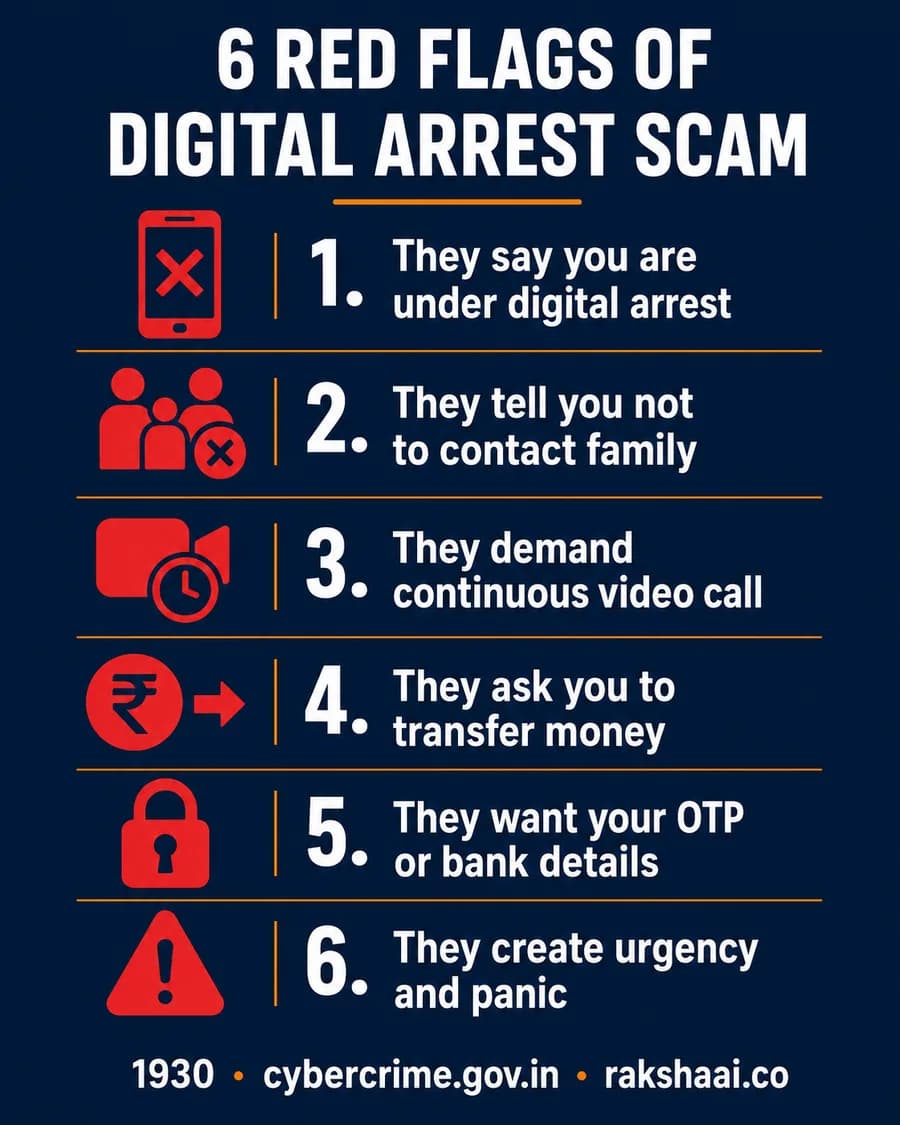
Share with family to spot a digital arrest scam instantly.
Any one of these is enough to end the call immediately:
- They say you are under digital arrest. This phrase does not exist in Indian law. Full stop.
- They tell you not to contact family. Real law enforcement never isolates you from your family or lawyer.
- They demand a continuous video call. No legitimate investigation works this way.
- They ask you to transfer money. Government agencies do not collect money over phone calls, ever.
- They want your OTP or bank details. A real officer would invite you to a physical office, not ask for banking credentials over a phone call.
- They create urgency and panic. Urgency is the scammer's most powerful weapon. Real legal processes take days, not minutes.
What Real Government Agencies Actually Do
Understanding what genuine law enforcement actually does (and does not do) makes it impossible for scammers to fool you:
- Real CBI, ED, and police officers arrive in person with official written documentation, including summons, warrants, and notices on official letterheads.
- They never demand money over the phone or ask for “bail bonds” to be transferred to a personal or business account.
- They never ask you to keep the call secret from your family or lawyer. You have a constitutional right to legal counsel.
- They never conduct investigations over WhatsApp, Telegram, or Skype.
- They never ask for OTPs, CVV numbers, or net banking passwords.
- Court summons are delivered via registered post or in-person process servers, never as screenshots on WhatsApp.
If an “officer” tells you they cannot come to your house because you are being “monitored” or that calling your lawyer will “complicate the case,” you are talking to a scammer.
What To Do the Moment You Get This Call
If you received a digital arrest call in India: hang up, call 1930, tell your family, and file at cybercrime.gov.in. Do not transfer any money. Report within 30 minutes.
Step 1: Hang Up Immediately
The moment you hear the words “digital arrest”, “CBI investigation”, or any request to stay on the call, hang up immediately. Do not explain yourself. Do not ask questions. Do not wait for them to finish. Just end the call.
The longer you stay on the call, the more information scammers extract and the more effective their psychological pressure becomes. Every second counts.
Step 2: Do Not Call Back
Do not call back the number. Do not respond to callback SMS messages. Calling back signals to the scammer that you are engaged. They will restart the manipulation cycle. Block the number immediately.
Step 3: Tell Your Family
Isolation is the scammer's most powerful tool. Telling your family immediately breaks that isolation. A second perspective from someone who cares about you, and who is not in a state of panic, almost always makes the scam obvious within minutes.
Step 4: Call 1930
1930 is India's National Cybercrime Helpline, operated 24/7 by the Ministry of Home Affairs. Call this number to:
- Report the scam
- Freeze transactions if you already transferred money
- Get guidance on next steps from trained officers
If you transferred money, calling 1930 within 30 minutes gives you the best chance of intercepting the transfer before it reaches the scammer. After 24 hours, the money is significantly harder to recover.
Step 5: File at cybercrime.gov.in
File a formal complaint at cybercrime.gov.in, India's official cybercrime reporting portal. Keep records of:
- The phone number that called you
- Any WhatsApp messages, documents, or screenshots sent by the scammer
- Bank transaction references if money was transferred
- Date, time, and duration of the call
Step 6: Check on RakshaAI
Paste the caller's phone number into RakshaAI to instantly check if it has been reported by other victims. This helps confirm what you already know, and your report helps protect the next person who receives the same call.
How to Protect Yourself Going Forward
Save 1930 in your contacts now. Available 24/7 and completely free.
Prevention is far easier than recovery. These steps dramatically reduce your risk:
- Save 1930 in your contacts right now, before you need it. Searching for it during a panic is harder than you think.
- Tell your parents and grandparents about this scam today. Senior citizens are disproportionately targeted because they have higher trust in authority figures.
- Verify any caller claiming to be government. Ask for their officer ID and tell them you will call back on the official agency number. Real officers will give it to you without hesitation.
- Never share OTP, UPI PIN, or banking details with anyone on a call, regardless of who they claim to be.
- Check unknown phone numbers on RakshaAI before engaging with any caller making unusual claims.
- If you are on a call and feel panic rising, remember: that panic is the product of the scam, not evidence of real trouble. Real emergencies give you time to verify. Fake ones never do.
Frequently Asked Questions
Is digital arrest legal in India?
No. Digital arrest does not exist in Indian law. No government agency (CBI, ED, NCB, TRAI, or any court) can arrest you over a phone or video call. The Ministry of Home Affairs has explicitly stated this. Anyone claiming to digitally arrest you is a scammer. Hang up immediately.
What should I do if I get a digital arrest call?
Hang up immediately. Do not call back. Tell your family. Call the Cybercrime Helpline 1930. File a complaint at cybercrime.gov.in. If you already transferred money, call 1930 within 30 minutes for the best chance of recovery. Check the scammer's number at rakshaai.co/phone-number-checker.
How do digital arrest scammers get my personal information?
Scammers purchase personal data including names, phone numbers, city, and partial Aadhaar digits from data breaches and underground databases. This is why they can sound so specific and credible. The fact that they know your name or city is not evidence that they are real. It only means your data was in a leak.
Can I recover money lost in a digital arrest scam?
Recovery is possible but time-sensitive. Calling 1930 within 30–60 minutes of the transfer gives responders a window to freeze the receiving account before the money moves to mule accounts and is withdrawn. After 24 hours, recovery becomes significantly harder. Never delay reporting, even if you feel embarrassed. These scammers are professionals. Being deceived is not a character flaw.
Which helpline should I call for digital arrest scam?
Call 1930, India's National Cybercrime Helpline, available 24 hours a day, 7 days a week, completely free. Also report at cybercrime.gov.in and check the caller's number at rakshaai.co/phone-number-checker to warn other potential victims.
Final Thoughts
The digital arrest scam works because it hijacks your brain's fear response. When you believe you are facing criminal prosecution, rational thinking shuts down. That is exactly what scammers count on.
The antidote is knowledge. Now that you understand what digital arrest is, how it works, and what the red flags are, you are already protected. The call loses all its power the moment you know it is fake.
Bookmark this page. Share it with someone in your family who might be vulnerable. And if you ever receive that call, hang up, breathe, and call 1930. You now know exactly what to do.
Related Guides
Free Tool
Got a suspicious call or number?
Paste any phone number, URL, or UPI ID into RakshaAI and get an instant scam risk report. No sign-up. No cost. Results in under 5 seconds.
Check a number now →100% free · No sign-up required · Save 1930 in your contacts
More from RakshaAI Blog
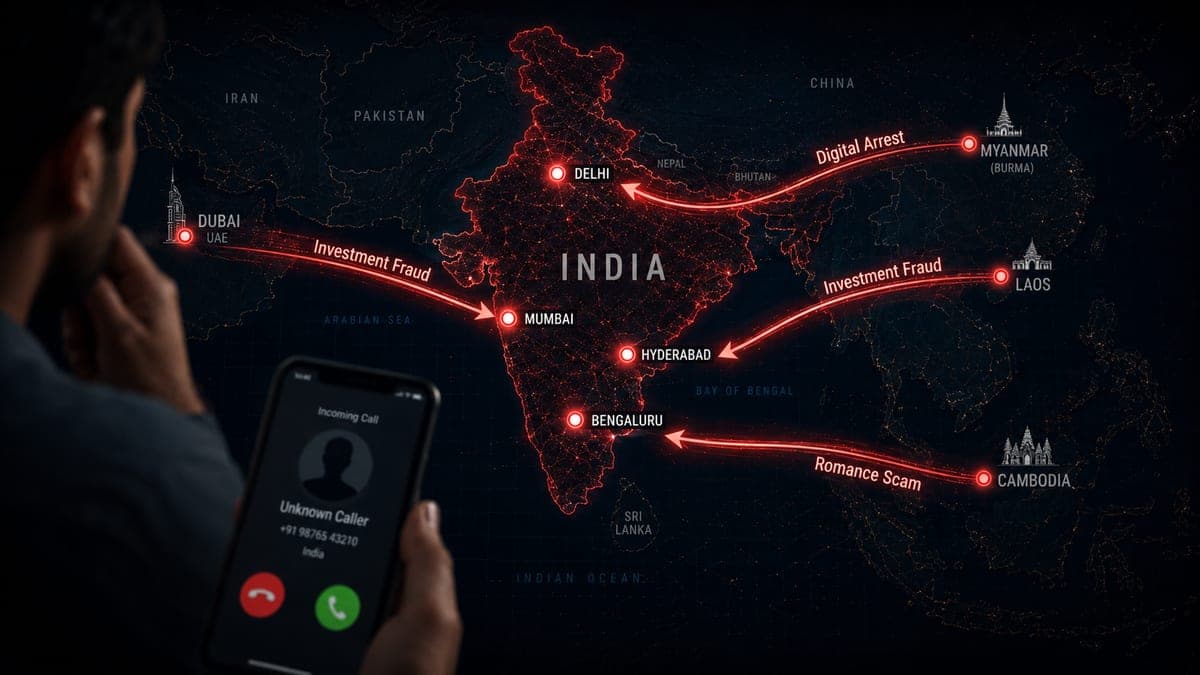
Transnational Cyber Fraud India: How Southeast Asian Scam Compounds Target You
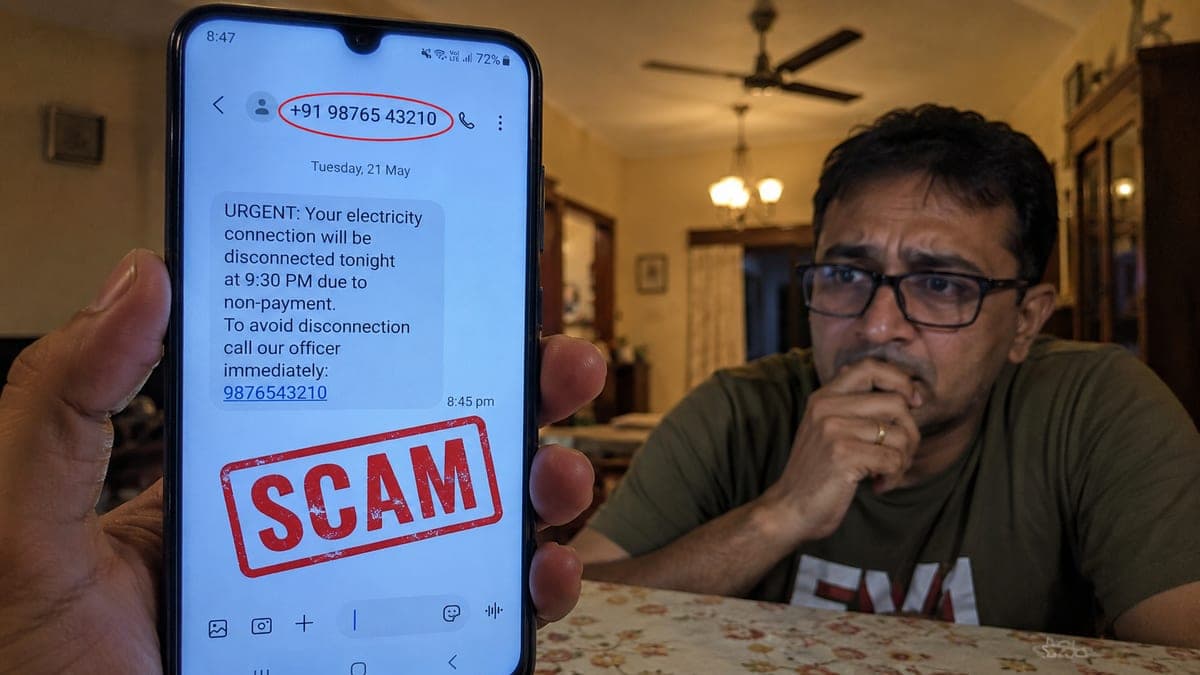
Electricity Bill Scam India: That Disconnection Today SMS Is Always Fake
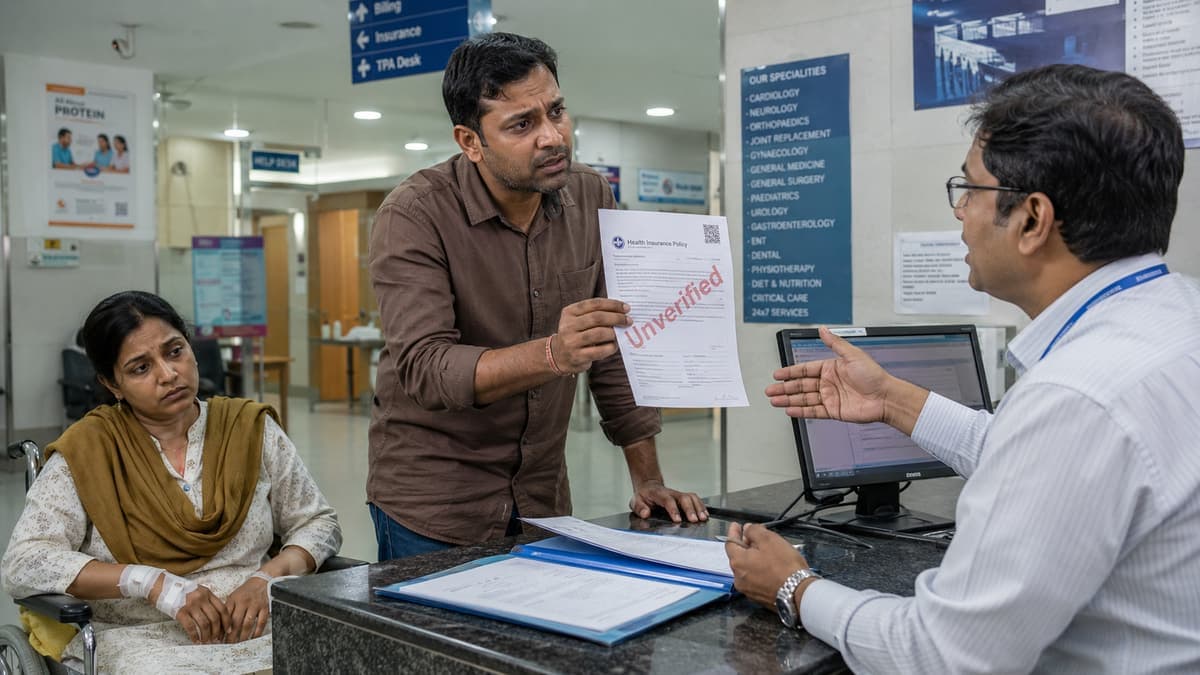
Health Insurance Fraud India: Fake Mediclaim Policies and Hospital Scams
Stay Protected Online
Use RakshaAI to check websites, phone numbers, and UPI IDs for scams free, instant, no sign-up required.
RakshaAI is a private platform by Ehatech Services Pvt. Ltd. Not affiliated with any government body. Editorial policy