
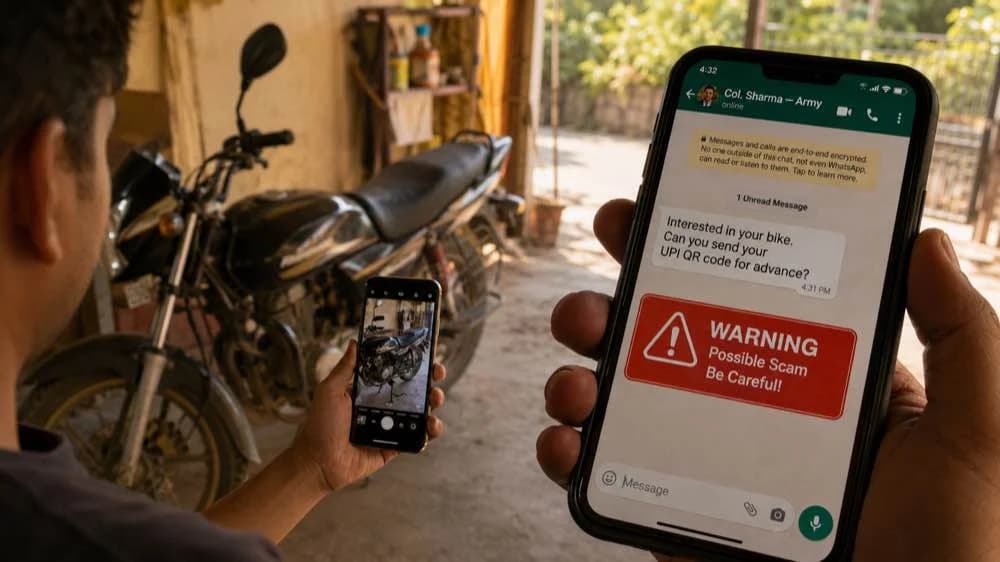
Fake sellers use urgency, stolen photos and off-platform payments to remove your buyer protection.
India has a growing fake online sellers problem. Sellers on WhatsApp, Instagram, Meesho, OLX and Facebook Marketplace take money, ship nothing, ship a counterfeit or send a fake tracking number to buy time.
This guide covers 8 universal red flags and platform-specific checks for WhatsApp, Instagram, Facebook, Meesho, Flipkart, Amazon and OLX. If you have already paid a fake seller, skip to the recovery section and act quickly.
Rs. 22,845 Cr
Cyber fraud loss, India 2024
#1 Platform
WhatsApp for seller fraud
8 Red Flags
Covered in this guide
Free Check
Website + UPI ID
Check any seller website right now
Paste the seller website into RakshaAI and check for scam reports, suspicious domain signals and fraud patterns before you pay.
How Fake Online Seller Scams Work in India
Fake sellers follow repeatable playbooks. The victim usually sees a product they want at a believable discount, the seller builds enough trust with photos and fake reviews, then payment is moved to a channel with no buyer protection.
| Scam Type | How It Works | Most Common Platform |
|---|---|---|
| Advance payment fraud | Seller asks for full or partial advance via UPI, then blocks the buyer or demands more money. | WhatsApp, OLX, Instagram |
| COD fake package | Cash-on-delivery package contains bricks, sand, empty box or a cheap substitute. | Meesho, Flipkart third-party, fake sites |
| Fake tracking number | Seller sends tracking details for another package or a shipment that does not exist. | WhatsApp, Instagram, OLX |
| Counterfeit product | A low-quality or wrong-brand product arrives, and the seller becomes unreachable for returns. | Facebook Marketplace, Meesho, Amazon third-party |
| Fake escrow payment | Seller sends the buyer to a fake escrow service controlled by the scammer. | OLX, LinkedIn, high-value sales |
8 Universal Red Flags - Spot a Fake Seller on Any Platform
These signs apply regardless of where you found the seller. If you see three or more, do not pay until you verify the seller independently.
The fastest single check is to search the seller website and UPI ID on RakshaAI. If other users reported the same seller, phone number, UPI ID or website, you can see the warning before you pay.
The Payment Trap - How Fake Sellers Get Your Money
Payment is where fake sellers become dangerous. They try to move you away from platform protections and into direct UPI, bank transfer, fake escrow or misleading payment requests.
| Payment Request | What It Actually Means |
|---|---|
| Pay 50% advance to confirm order | Classic fake seller trick. After advance, the seller may block you or demand the rest before shipping. |
| Pay to our secure escrow service | The escrow is controlled by the scammer. No independent protection exists. |
| Pay via UPI request I send | Some requests are designed to make money leave your account while looking like a receive flow. |
| COD, pay only on delivery | COD can still be unsafe if the package contains a fake item and the seller disappears. |
| Bank transfer for discount | Moving off platform removes buyer protection and makes recovery harder. |
Platform Guide 1 - WhatsApp Sellers
WhatsApp is the highest-risk seller-fraud channel because there is no built-in buyer protection and sellers can disappear instantly.
Verification checklist
- Ask for GSTIN and verify it at gst.gov.in.
- Check the seller UPI ID at RakshaAI before paying.
- Confirm whether the account is WhatsApp Business, not only a personal number.
- Ask for website, Google Business Profile or physical address and verify independently.
- Reverse image search product photos using WhatsApp Web or Google Lens.
- Before confirming UPI, check whether the displayed name matches the seller's stated business name.
Platform Guide 2 - Instagram and Facebook Sellers
Instagram and Facebook seller scams rely on attractive product photos, urgency and direct-message payments outside any buyer-protection system.
Verification checklist
- Check Instagram account age from About this account where available.
- Compare followers with engagement. Huge follower count with almost no comments can mean purchased followers.
- Check whether products are tagged through Instagram Shopping.
- On Facebook Marketplace, inspect profile age, reviews and history.
- Never pay off-platform when platform checkout or buyer protection is available.
- Scan any seller website and UPI ID before payment.
Platform Guide 3 - Meesho, Flipkart and Amazon Sellers
Marketplaces are safer when payment stays inside the platform, but third-party sellers and counterfeit-product scams still happen.
Verification checklist
- On Meesho, prefer 4.5+ seller rating, strong order history and recent genuine reviews.
- Avoid sellers with all five-star reviews posted in the last few days.
- On Flipkart, check Sold By, rating, seller age and return policy.
- On Amazon, prefer Fulfilled by Amazon listings for higher logistics control.
- If product arrives counterfeit, record photos and video before raising the dispute.
- Never pay a marketplace seller outside the platform for a better price.
Platform Guide 4 - OLX and Classifieds Platforms
OLX and classifieds are high-risk because payments and delivery usually happen outside the platform. Treat every advance request as suspicious.
Verification checklist
- Never pay advance on OLX. There is no platform dispute mechanism for off-platform payments.
- Meet in a safe public place such as a mall, bank lobby or police station area.
- For vehicles and electronics, verify ownership documents before paying.
- For vehicles, verify RC details at parivahan.gov.in.
- Ask for identity proof where appropriate and match the seller name.
- Verify tracking numbers only on the courier's official website.
Check any seller UPI ID before paying
RakshaAI UPI ID Checker helps you review the registered name and fraud-report signals before you send money.
6 Rules That Protect You From Fake Sellers
These habits work across every platform. They are simple, but they interrupt the exact flow scammers rely on.
Check before paying
Scan seller website, UPI ID and seller name before any high-value payment.
Pay on-platform only
Platform payment keeps buyer protection. Personal UPI removes it.
Never pay full advance
For unknown sellers, full advance is the most common path to fraud.
Reverse image search
If product photos appear on another store, the seller may not own the product.
Check GST above Rs. 5,000
Ask for GSTIN and verify it at gst.gov.in for regular sellers.
Verify UPI name match
The payment screen name should match seller or business identity.
Already Paid a Fake Seller? How to Report and Recover
Act within 30 minutes for the best chance of recovery. Every hour reduces the chance that the destination account can be frozen.
Within 30 min
Call 1930
Report transaction amount, time, seller UPI or bank details and platform used.
Within 1 hour
Call bank and UPI app
Raise a transaction dispute and request freeze or reversal action.
Within 24 hours
File at cybercrime.gov.in
Attach screenshots, transaction records and seller contact details.
Within 48 hours
Use consumer channels
For larger losses, contact National Consumer Helpline or consumerhelpline.gov.in.
Within 7 days
File FIR and platform dispute
Use Cyber Crime Cell where possible and raise Meesho, Flipkart or Amazon disputes if platform payment was used.
Spotted a Fake Seller?
Report the seller to RakshaAI so other buyers can see fraud signals before paying the same phone number, UPI ID or website.
Fake Seller Statistics in India - The Scale of the Problem
Verification feels like extra effort until you see the scale. Fake seller fraud is no longer rare. It is part of everyday online shopping risk in India.
| Metric | Figure | Source |
|---|---|---|
| Total cyber fraud loss in 2024 | Rs. 22,845 crore | MHA / I4C reporting |
| Tier 2/3 city exposure | 2.8x higher fake seller encounter risk | RakshaAI internal data |
| Fraud complaints | 15+ lakh complaints | NCRP / MHA reporting |
| WhatsApp seller fraud share | Estimated 38% of fake seller cases | Cyber safety advisories |
| Social commerce growth | 62% year-over-year fraud growth | CERT-In and platform-risk reporting |
| Average advance-payment loss | Approx. Rs. 18,000 | Cybercrime reporting patterns |
Frequently Asked Questions
How do I know if an online seller is fake?
Look for these signs: price far below market, WhatsApp-only contact, stolen product photos, no return policy, no GST number, recently created account, fake reviews, and advance payment to a personal UPI account. Three or more signs means do not pay.
How do I verify a seller on WhatsApp?
Ask for GSTIN and verify it at gst.gov.in. Check the seller UPI ID at RakshaAI before paying. Confirm whether they use WhatsApp Business, verify their address, and reverse image search the product photos.
Is this seller real or fake?
Run a 3-step check: scan the seller website on RakshaAI, check the UPI ID before paying, and search whether the seller appears in the RakshaAI Verified Businesses directory.
Can I get money back after paying a fake seller?
Your best chance is to call 1930 within 30 minutes, raise a UPI or bank dispute, file at cybercrime.gov.in, and report the seller to RakshaAI. Recovery probability drops quickly after the first few hours.
I paid advance and the seller blocked me. What do I do?
Immediately call 1930 with transaction details, raise a dispute in your UPI app, file at cybercrime.gov.in, save all screenshots, and report the seller to RakshaAI before their account disappears.
How do I report a fake seller in India?
Report financial fraud at cybercrime.gov.in and call 1930 if money is lost. For high-value losses, file an FIR at your nearest Cyber Crime Cell. Also report the seller to RakshaAI to warn other buyers.
Is it safe to buy on Meesho or OLX?
Meesho has platform buyer protection when you pay inside the app. OLX has no built-in buyer protection, so never pay advance and meet in a safe public place for high-value items.
How do I check if a Flipkart or Amazon seller is genuine?
Check Sold By, seller rating, review history, time active and fulfillment type. Prefer platform-fulfilled listings and never pay outside Flipkart or Amazon, no matter what the seller offers.
What is the fake tracking number scam?
After receiving payment, the seller sends a tracking number that belongs to another package, another address or no shipment at all. Verify tracking only on the courier's official website.
What should I check before paying a seller UPI ID?
Check the UPI ID on RakshaAI and confirm the registered name matches the seller or business name. If the payment screen shows an unrelated personal name, stop.
Related Free Safety Tools and Guides
| Resource | What It Does | URL |
|---|---|---|
| Website Safety Checker | Check any seller website for fraud signals | /website-safety-checker/ |
| UPI ID Checker | Check seller UPI ID before paying | /upi-id-checker/ |
| Verified Businesses Directory | Find businesses verified across RakshaAI checks | /trust-certification/verified-businesses/ |
| E-Commerce Fraud Guide | Full guide to online shopping fraud in India | /scams/e-commerce-fraud/ |
| How to Verify a Business | 8 methods to verify any business before paying | /blog/how-to-verify-a-business-india/ |
| UPI Fraud Guide | Understand UPI traps used by fake sellers | /scams/upi-fraud/ |
The safest habit is simple: check before you pay. If the seller pushes you to pay fast, leave the platform, ignore verification or use a personal UPI account, that urgency is the warning.
More from RakshaAI Blog
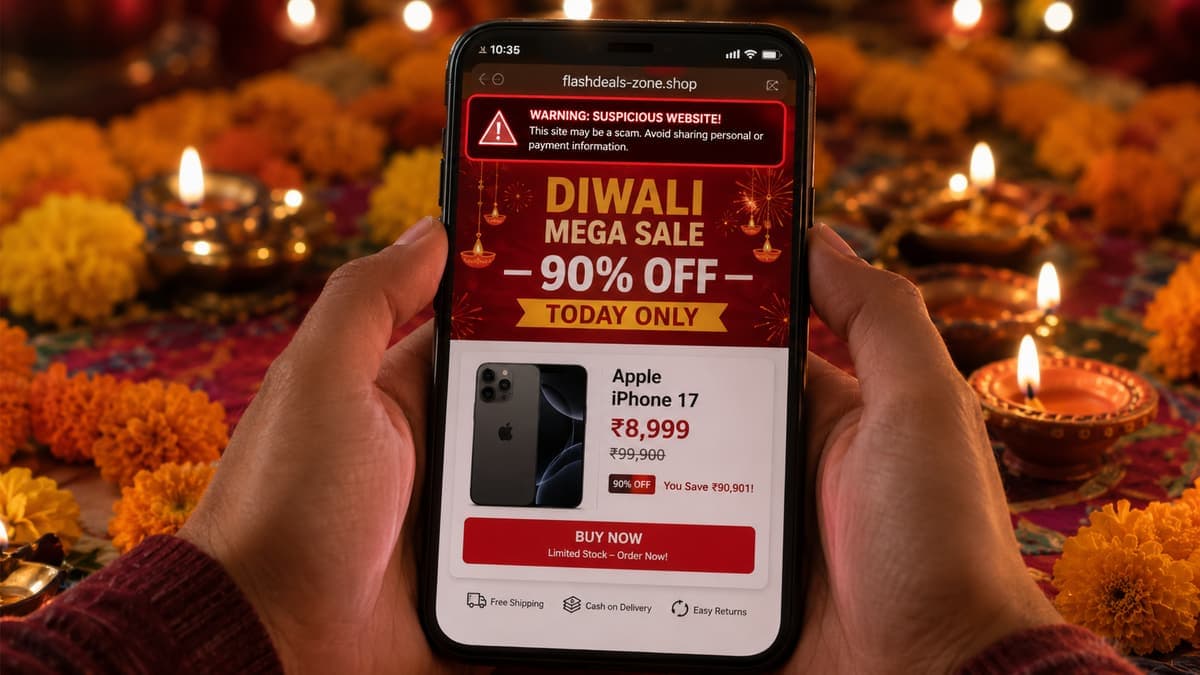
Festive Season Scam India: How Scammers Exploit Diwali, Dussehra and Navratri
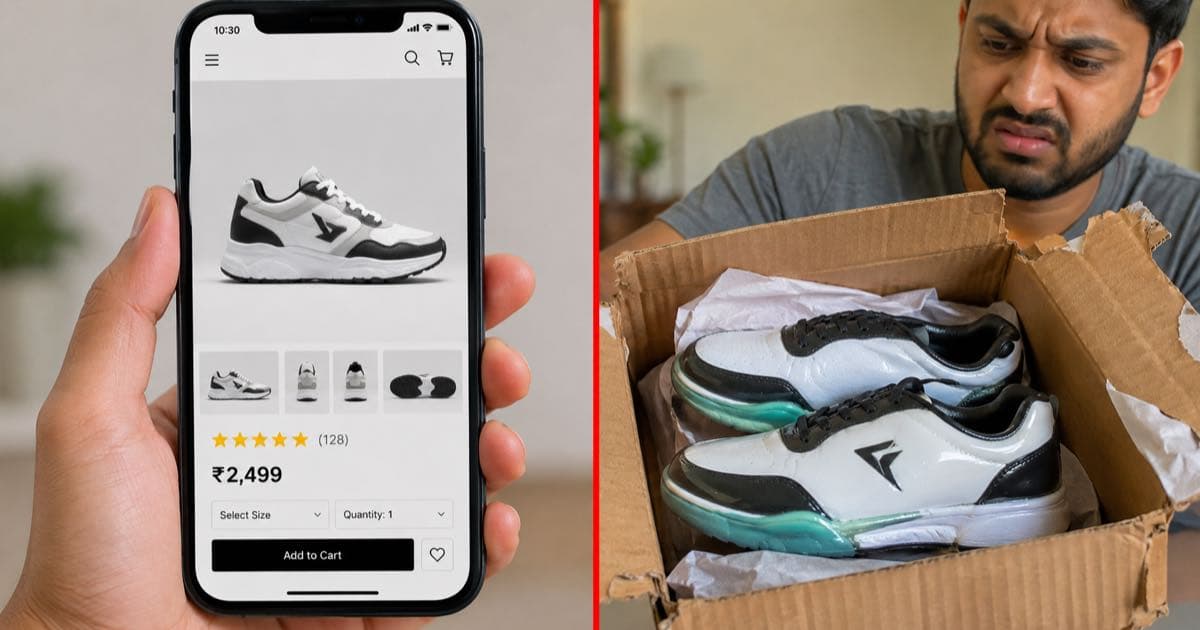
Online Shopping Scam India: How to Buy Safely on Any Platform in 2026
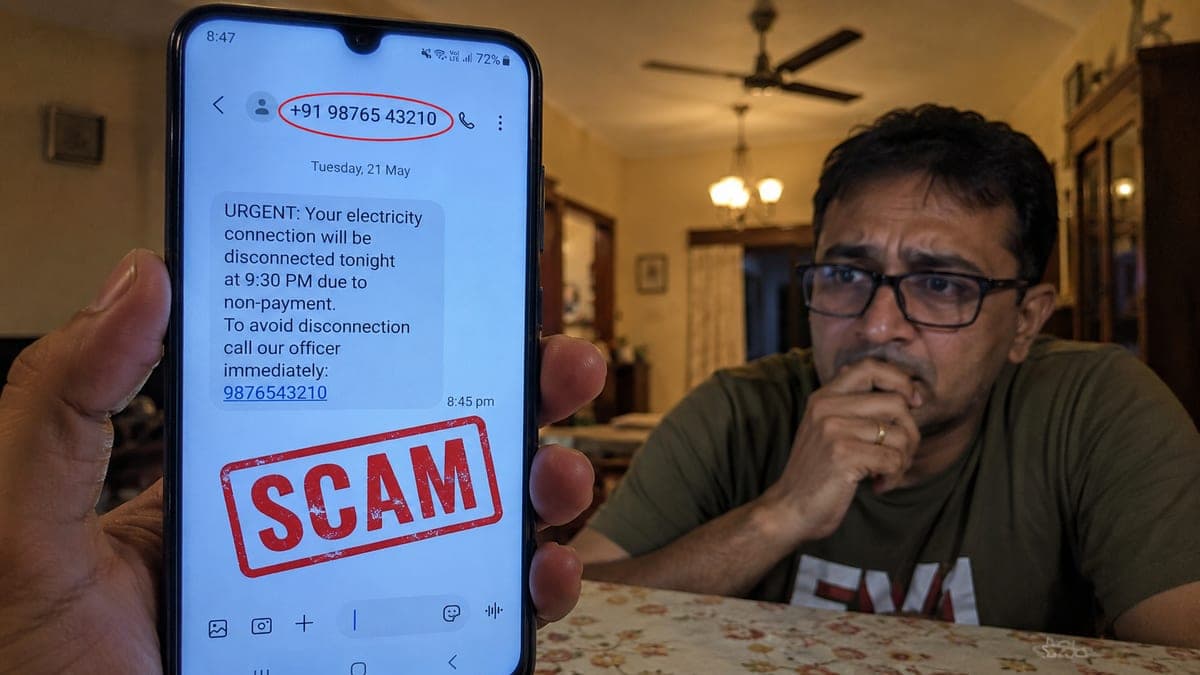
Electricity Bill Scam India: That Disconnection Today SMS Is Always Fake
Stay Protected Online
Use RakshaAI to check websites, phone numbers, and UPI IDs for scams free, instant, no sign-up required.
RakshaAI is a private platform by Ehatech Services Pvt. Ltd. Not affiliated with any government body. Editorial policy